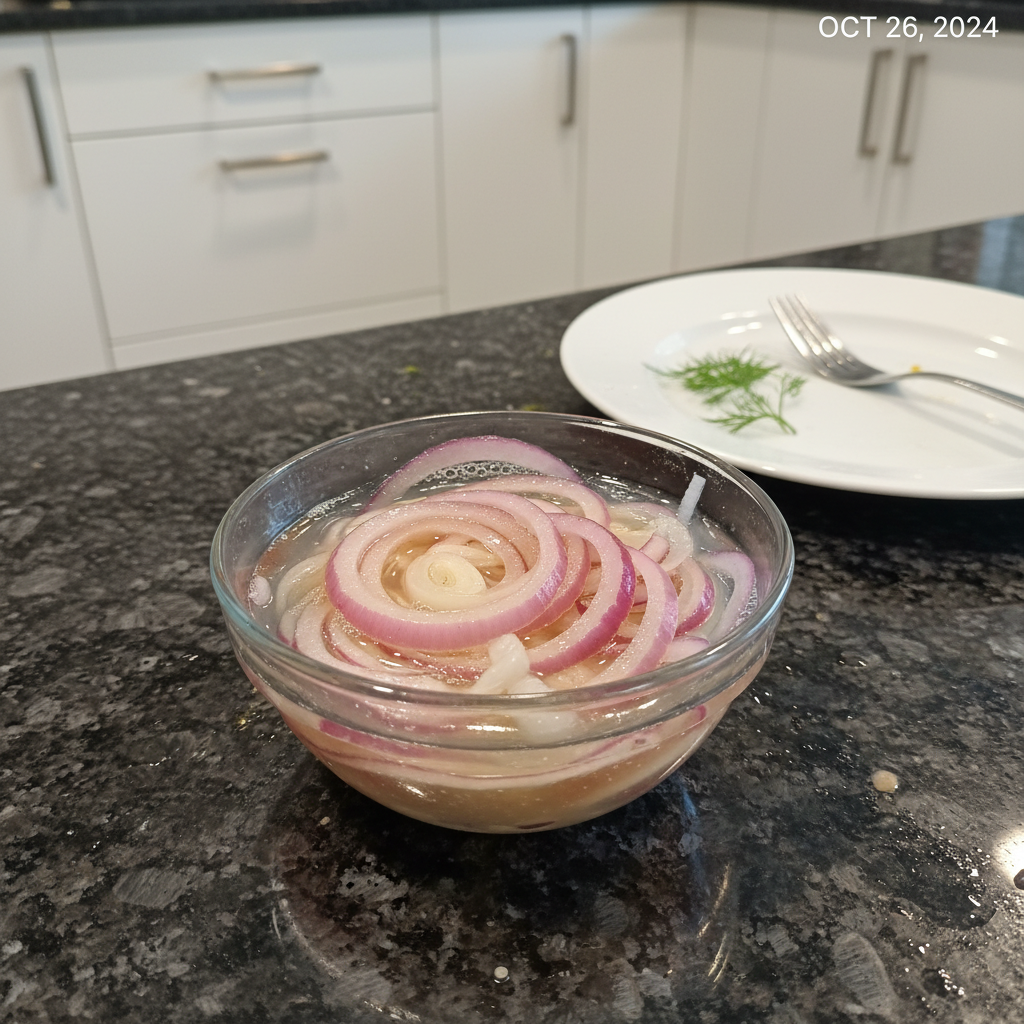
Ingredients
Equipment
Method
Preparing Your Jar and Onions
- Choose a 16 oz wide-mouth mason jar for a single large onion. Ensure your jar and utensils are impeccably clean to prevent mold. Place the clean mason jar on your kitchen scale and tare to zero out its weight.
Brining the Onions
- Carefully fit the sliced onion into the mason jar, packing them well without bruising. Pour in enough distilled water to completely cover the onions. Note the total weight in grams of the onion and water combined.
- Multiply the total weight by 0.02 to determine the exact amount of sea salt or pickling salt needed in grams. Tare the scale again and add the calculated amount of salt to the jar.
- Put on the lid and shake well to dissolve the salt, ensuring a precise salt concentration vital for lacto-fermentation.
Ensuring Submersion and Fermentation
- Keep the onions submerged beneath the brine using fermentation weights, small pinch bowls, a smaller mason jar, or a plastic sandwich bag filled with water to prevent mold growth.
- Leave your ferment at room temperature, ideally between 65-75°F (18-24°C), away from direct sunlight for 4-7 days.
- Check daily to ensure onions remain submerged. If not using an airlock lid, open the lid slightly each day (burp) to release pressure, then close tightly.
Halting Fermentation and Storage
- Once your fermented onions reach the desired flavor (taste after about 4 days), place the jar in the fridge. The cool temperatures will halt the fermentation process.
- Enjoy your tangy, gut-healthy condiment. Stored in the fridge, your fermented onions will keep for several months.
Nutrition
Notes
For best results, use a kitchen scale for precise salt measurements and ensure onions remain submerged in the brine. Experiment with aromatics like garlic or herbs during fermentation for unique flavor twists. Store refrigerated for several months.
Nutrition information is estimated based on common ingredients and serving sizes and may vary.