Hello, fellow food enthusiasts! Today, I am incredibly excited to share one of my absolute favorite kitchen projects: making Fermented Onions. This simple yet transformative process turns humble onions into a tangy, probiotic-rich condiment that will elevate almost any dish. Whether you are a seasoned fermenter or just curious about lacto-fermentation, this guide is designed to walk you through an easy, foolproof method for creating delicious fermented onions right in your own kitchen. Prepare to discover the incredible flavor and gut-friendly benefits these pickled delights offer.
Why You’ll Love This Recipe
This fermented onions recipe stands out with its unique approach to flavor and reliability.
Delectable complex flavors. I introduce the option of a secondary fermentation with aromatics like thyme, bay leaf, chili flakes, or even a touch of honey or sugar. This deepens the flavor profile, creating a more nuanced and exciting ferment.
A more robust and reliable ferment. A small amount of honey or sugar can provide additional food for the beneficial bacteria, leading to a more active and robust fermentation process.
Convenience for beginners and experts. I highly recommend using fermentation airlock lids. These clever tools maintain the perfect anaerobic environment, significantly reducing the risk of contamination and eliminating the need for daily burping. This makes the entire process incredibly convenient and reliable, especially if you are new to making fermented onions.
It is easy to make at home. You will be amazed at how straightforward it is to transform simple onions into something extraordinary.
A fantastic way to preserve onions. Fermentation is an ancient and effective method of food preservation, extending the life of your onions while enhancing their properties.
Adds a tangy, flavorful kick to many dishes. These pungent, sour, and tangy fermented onions bring a bright acidity and wonderful texture to a wide variety of meals.
Gut-friendly and probiotic-rich. Beyond their incredible taste, fermented onions are packed with beneficial probiotics that support gut health. To learn more about how fermented foods can benefit your well-being, read about the health benefits of fermented foods.
Ingredients Needed
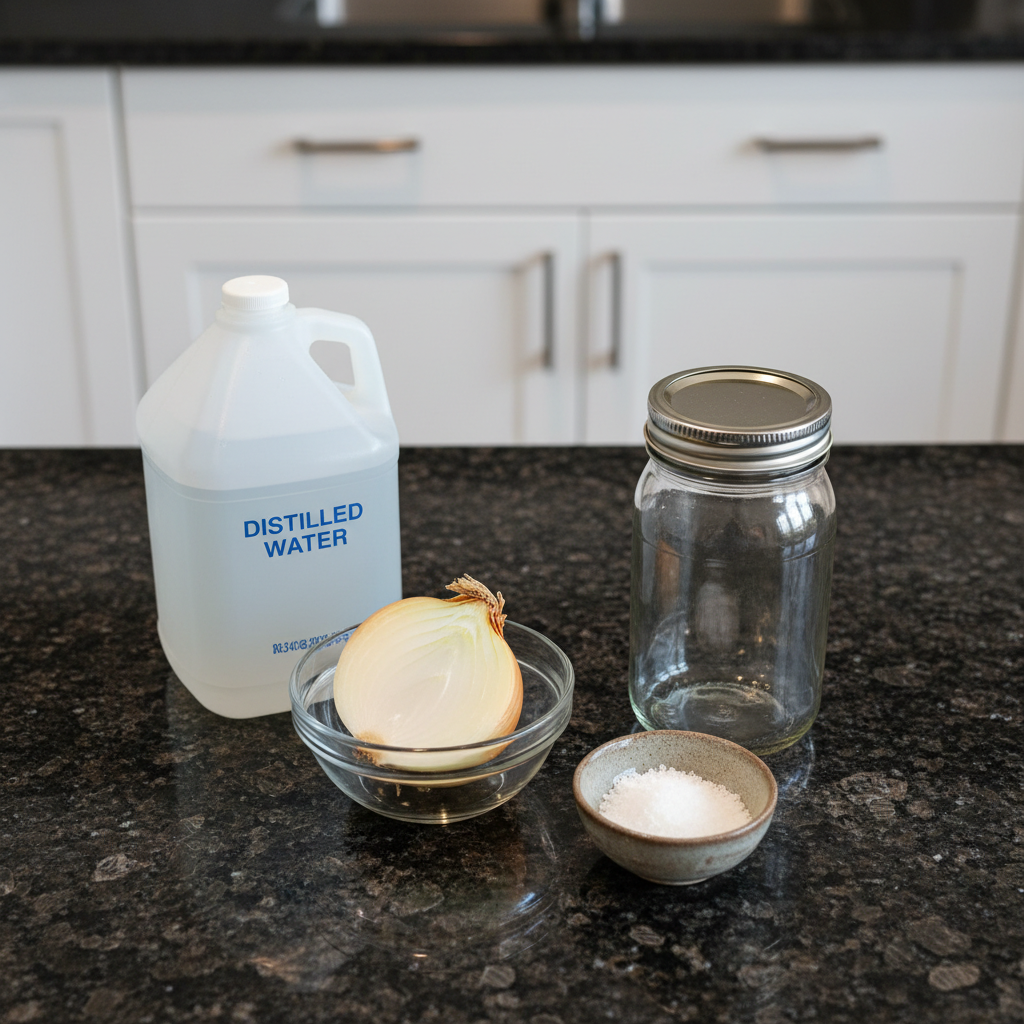
Here is what you will need to start your fermentation journey in my kitchen.
1 large onion
distilled water (weight to be determined)
sea salt or pickling salt (weight to be determined )
Ingredient Notes & Substitutions
When choosing your onions for fermentation, you have several excellent options, and each will yield a slightly different result.
Red onion will give you beautiful color and a slightly milder flavor once fermented. White onion offers a classic, more pungent taste, while a yellow onion provides a balanced flavor profile. For a sweeter ferment, you might consider a sweet onion. The type of onion you select will impact the final flavor and texture, so feel free to experiment to find your favorite.
Regarding salt, it is absolutely crucial to use sea salt or pickling salt. Avoid iodized salt as the iodine and anti-caking agents it contains can inhibit the beneficial bacteria responsible for lacto-fermentation. Using the correct type of salt is essential for a successful and safe ferment.
For your liquid, distilled water is preferred. Tap water often contains chlorine and other chemicals that can interfere with the delicate balance of microorganisms needed for proper fermentation. Using distilled water ensures the best environment for your probiotics to thrive.
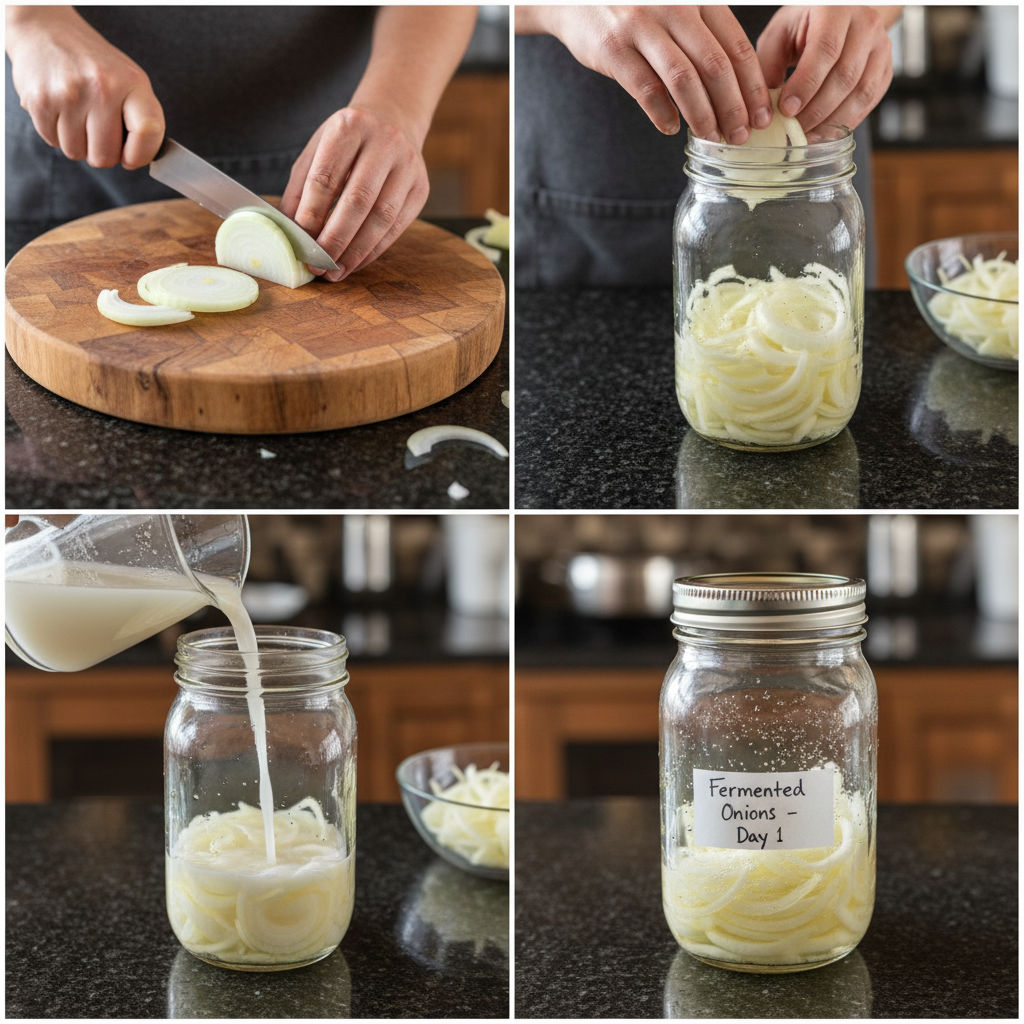
How to Make Fermented Onions
Now, let us get into the hands-on process of creating these wonderful fermented onions. This method emphasizes precision and care, leading to a perfect ferment every time.
Preparing Your Jar and Onions
First, you need to choose a mason jar that is the appropriate size to fit your sliced onion. I typically use a 16 oz wide mouth style mason jar for a single large onion. Sanitation is key in fermentation, so always ensure your jars and utensils are impeccably clean to prevent undesirable mold growth. Place your clean mason jar on your kitchen scale and press tare to zero out the weight of the jar.
Brining the Onions
Next, carefully fit the sliced onion into the mason jar. You will want to pack them in well, but not so tightly that they are bruised. Pour in enough distilled water to completely cover the onions. Take note of the total weight in grams of the onion and water combined. This precise measurement is critical for calculating your salt. To determine the exact amount of sea salt or pickling salt you need to add in grams, multiply that total weight by .02.
For example, if the weight of the onion and water combined is 800 grams, you will multiply 800 by .02 and get 16. In this instance, I would add 16 grams of salt to my jar. This precise salt concentration is vital for creating the right anaerobic environment for lacto-fermentation and preventing spoilage. Tare the scale again and add the calculated amount of salt in grams that you determined in the above step. Put on the lid and shake well to dissolve the salt.
Ensuring Submersion and Fermentation
It is very important to keep the onions submerged beneath the brine throughout the entire process. Any pieces of onion exposed to air can become a breeding ground for mold. To do this, you can use fermentation weights, small pinch bowls, a smaller mason jar, or even a plastic sandwich bag filled with a little water. While a plastic sandwich bag can work, using fermentation weights or glass alternatives is generally preferred to avoid introducing plastic to your ferment.
Leave your ferment at room temperature, ideally between 65-75°F (18-24°C), away from direct sunlight for 4-7 days. Direct sunlight can cause undesirable temperature fluctuations and promote unwanted growth. Check it once a day to make sure the onions are still submerged. If you are not using an airlock lid, you must open the lid slightly on a daily basis to prevent pressure from building up in the jar. This release of gas is known as burping. Close it again tightly after burping. If you notice it is not bubbling, it could be a sign that the temperature is too low or the fermentation is simply slow, but it does not necessarily mean it has gone wrong.
Halting Fermentation and Storage
Once your fermented onions have reached the desired flavor—I suggest tasting a small piece after about 4 days—place the jar in the fridge. The cooler temperatures will halt the fermentation process, preserving the texture and flavor you love. Your fermented onions will now keep for a very long time, typically several months. Enjoy this tangy, gut-healthy condiment!
Mastering the Fermentation Environment
Creating the perfect environment is crucial for a successful and delicious batch of fermented onions. Understanding these factors will help you achieve consistent results.
Ideal Room Temperature Range
The ideal temperature range for lacto-fermentation is typically between 65-75°F (18-24°C). Within this range, the beneficial lactic acid bacteria thrive, converting sugars into lactic acid, which gives fermented foods their characteristic tangy flavor and acts as a natural preservative. If your kitchen is cooler, the fermentation will proceed more slowly, potentially taking longer than 7 days. In warmer climates, fermentation will be faster, and you might reach your desired flavor in just 3-4 days. It is important to avoid extreme temperatures, as very cold temperatures can stop the process, and very hot temperatures can lead to spoilage or undesirable off-flavors. Try to maintain a stable temperature by keeping your jar in a consistent spot away from drafts or direct heat sources.
Slicing Techniques and Texture
The way you slice your onions can significantly impact both the texture of your final fermented onions and their fermentation rate. Slicing the onions into thin rings or half-moons exposes more surface area to the brine, which can speed up the fermentation process slightly and create a more uniform texture. This is my preferred method, as it results in tender yet still somewhat crisp pieces that are perfect for a condiment. If you prefer a firmer, crunchier texture, you might opt for thicker slices or even a rough dice. Diced onions will ferment similarly but may offer a different mouthfeel when added to dishes. Experiment with different slicing methods to find the texture you enjoy most.
Safety and Troubleshooting
Ensuring safety in home fermentation is paramount. While lacto-fermentation is generally safe, knowing what to look for and how to handle common issues is important.
Detailed Safety Guidelines
Always begin with thoroughly sanitized equipment. Wash your mason jar, lid, and any tools you use with hot, soapy water, or run them through a dishwasher. Proper hygiene minimizes the risk of introducing unwanted bacteria or mold. During fermentation, inspect your jar daily. The most common sign of spoilage is mold, which typically appears as fuzzy, colored patches (blue, green, black, white) on the surface of the brine or on exposed vegetables. If you see mold, it is best to discard the entire batch. Off-odors, such as a rotten or putrid smell, also indicate spoilage. A healthy ferment should smell pleasantly sour, tangy, or slightly yeasty. Once your fermented onions are in the fridge, their shelf life is extended considerably. Fermentation itself is a preservation method, but it does not make food shelf-stable indefinitely outside of refrigeration. The cold temperatures of the refrigerator slow down bacterial activity, maintaining quality and safety.
Troubleshooting Common Issues
Beyond mold, there are a few other common issues you might encounter. If your fermented onions turn out too mushy, it could be due to a few factors: fermenting at too high a temperature, fermenting for too long, or using onions that were already past their prime. To prevent mushiness, maintain the ideal fermentation temperature and check for desired texture regularly. If your ferment is too salty, it is likely due to an incorrect salt-to-water ratio. While you cannot reduce the salt once it is in the brine, you can rinse the onions briefly before serving to lessen the saltiness. Not bubbling, or a lack of activity, does not always mean a failed ferment. Sometimes, fermentation can be very slow, especially in cooler environments, or the bubbles are simply too small to notice. If there is no mold and the smell is good, give it more time. Using tap water with chlorine can also inhibit bubbling, reinforcing the importance of distilled water.
Pro Tips & Troubleshooting
Here are some of my best tips for success and common mistakes to sidestep when making your fermented onions.
Pro Tips
Use a kitchen scale to ensure accurate salt measurements. This precision is critical for safe and effective fermentation.
Keep onions completely submerged to prevent mold growth. This maintains the essential anaerobic environment.
Keep ferments out of direct sunlight. Consistent, moderate temperatures are best for the beneficial bacteria.
Consider using airlock lids for easier maintenance and reduced risk of contamination. They automatically release gases without daily burping.
Experiment with adding herbs, spices, or a touch of honey or sugar for unique flavors. Garlic, peppercorns, or a sprig of fresh dill can transform your fermented onions.
Monitor the fermentation process daily for optimal results. Taste testing after a few days will help you determine when they are just right for your palate.
Common Mistakes to Avoid
Discarding ferment due to harmless yeast blooms. Kharm yeast, often appearing as a thin, white film on the surface, is typically harmless and different from fuzzy mold. You can often skim it off.
Using tap water, which can contain chlorine and inhibit fermentation. Always opt for distilled water for the best results.
Forgetting to burp the jar if not using an airlock lid. Pressure buildup can cause jars to crack.
Not using enough salt, which can lead to spoilage. Salt not only adds flavor but is a key preservative.
Using plastic bags or Tupperware to submerge the onions. While sometimes used, glass fermentation weights or a smaller glass jar are safer and more reliable.
Serving & Storage
Once your fermented onions are ready, a world of culinary possibilities opens up. They are incredibly versatile.
Serving Ideas
These tangy fermented onions are a fantastic condiment. I love topping burgers or sausages with them for an extra layer of bright acidity. They are a delightful addition when mixed into a Greek salad, adding a pungent, sour kick. They can truly elevate everyday meals, bringing color and nutrition to lunch bowls, scrambled eggs, or omelettes. Try pairing them with cheese and crackers for a gourmet snack, or incorporate them into tacos or quesadillas for a pop of flavor.
Storage and Make-Ahead
Properly store your fermented onions in the refrigerator. The cool temperatures will slow down the fermentation process significantly, preserving their delicious flavor and texture. In the fridge, they will last for several months, continuously developing subtle nuances in taste. As for the brine, it is absolutely edible! This flavorful liquid, rich in lactic acid and probiotics, can be used as a tangy dressing base, in marinades, or even added to a glass of water for a gut-healthy boost.
Conclusion
Making homemade fermented onions is a truly rewarding experience, offering a fantastic combination of vibrant flavor, powerful probiotics, and effective food preservation. This easy recipe, with its unique twist of optional secondary fermentation with aromatics and the reliability of airlock lids, empowers you to create a condiment that is far superior to anything store-bought. Even if you are completely new to the world of fermentation, I encourage you to give this recipe a try. Do not hesitate to experiment with different onion varieties, like red onion or sweet onion, and explore various flavor combinations by adding herbs or garlic. Your culinary adventures await! Share this recipe with friends, or explore other fermentation recipes in my kitchen. Happy fermenting!
FAQ
What is lacto-fermentation?
Lacto-fermentation is a natural preservation process where beneficial lactic acid bacteria convert sugars in vegetables into lactic acid. This acid acts as a preservative and gives fermented foods their characteristic tangy flavor. It is an anaerobic process, meaning it occurs in the absence of oxygen. For a detailed explanation of this process, you can read more about what lacto-fermentation is.
What are the health benefits of fermented onions?
Fermented onions are rich in probiotics, which are beneficial bacteria that can support gut health and digestion. They also retain many of the nutrients from raw onions, providing vitamins and enzymes that can enhance overall well-being.
What salt is best for lacto fermentation?
For lacto-fermentation, it is best to use non-iodized sea salt or pickling salt. Iodized salt can inhibit the growth of the beneficial bacteria needed for fermentation, and anti-caking agents found in some salts can make the brine cloudy.
Do fermented onions contain alcohol?
Lacto-fermentation primarily produces lactic acid, not significant amounts of alcohol. While a tiny trace amount of alcohol might be produced as a byproduct in some ferments, it is generally negligible and not enough to be intoxicating.
How long do fermented onions last?
Once transferred to the refrigerator, fermented onions can last for several months. The cold temperature significantly slows down the fermentation process, preserving their quality and flavor.
Do I need to use distilled water for fermenting onions?
Using distilled water is highly recommended for fermenting onions. Tap water often contains chlorine and other chemicals that can interfere with the delicate balance of beneficial bacteria, potentially inhibiting the fermentation process.
Should fermented onions be stored somewhere dark, ideally?
Yes, it is best to store ferments, including fermented onions, away from direct sunlight. Consistent, moderate room temperature is ideal for active fermentation, and direct sunlight can cause undesirable temperature fluctuations and promote unwanted growth.
How to tell if fermentation has gone wrong?
You can tell if fermentation has gone wrong by observing signs of spoilage. Look for fuzzy, discolored mold (blue, green, black) on the surface or on exposed vegetables. An off-odor, such as a rotten or putrid smell, is also a strong indicator that the ferment is not safe to eat. A healthy ferment should smell pleasantly tangy or sour.
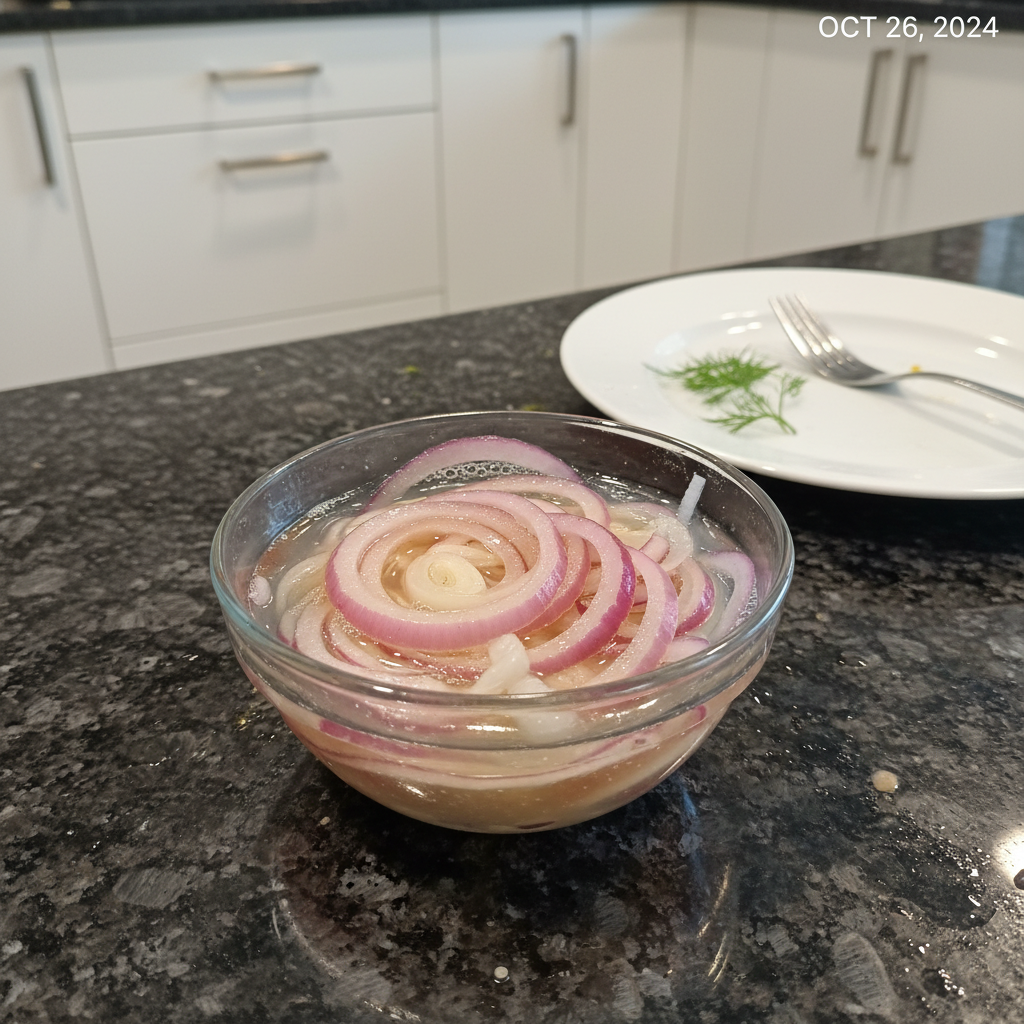
Easy Fermented Onions Recipe: Tangy, Probiotic-Rich!
Ingredients
Equipment
Method
- Choose a 16 oz wide-mouth mason jar for a single large onion. Ensure your jar and utensils are impeccably clean to prevent mold. Place the clean mason jar on your kitchen scale and tare to zero out its weight.
- Carefully fit the sliced onion into the mason jar, packing them well without bruising. Pour in enough distilled water to completely cover the onions. Note the total weight in grams of the onion and water combined.
- Multiply the total weight by 0.02 to determine the exact amount of sea salt or pickling salt needed in grams. Tare the scale again and add the calculated amount of salt to the jar.
- Put on the lid and shake well to dissolve the salt, ensuring a precise salt concentration vital for lacto-fermentation.
- Keep the onions submerged beneath the brine using fermentation weights, small pinch bowls, a smaller mason jar, or a plastic sandwich bag filled with water to prevent mold growth.
- Leave your ferment at room temperature, ideally between 65-75°F (18-24°C), away from direct sunlight for 4-7 days.
- Check daily to ensure onions remain submerged. If not using an airlock lid, open the lid slightly each day (burp) to release pressure, then close tightly.
- Once your fermented onions reach the desired flavor (taste after about 4 days), place the jar in the fridge. The cool temperatures will halt the fermentation process.
- Enjoy your tangy, gut-healthy condiment. Stored in the fridge, your fermented onions will keep for several months.