Achieving truly juicy slow cooker chicken breasts can feel like a culinary quest. Too often, we are left with dry, rubbery results that disappoint. But what if I told you there is a simple trick to guarantee perfectly moist, tender, juicy slow cooker chicken breasts every single time? This recipe delivers just that, along with all the practical tips you need to avoid common pitfalls. Get ready to master cooking perfectly moist chicken, understand safe thawing, and learn the science behind true juiciness.
Why You’ll Love This Recipe
This recipe introduces my secret weapon for consistently tender chicken: The Parchment Paper Steam Seal. It is a game-changer for anyone who has struggled with dry slow cooker chicken.
The scientific logic is beautifully simple. Placing a sheet of parchment paper directly on top of the chicken breasts before adding the slow cooker lid creates a secondary barrier. This parchment forms a ‘cartouche’ that traps the rising steam closer to the meat. It drastically reduces the empty headspace, preventing the top surface of the chicken from drying out and becoming rubbery due to exposure to dry air.
Unrivaled Juiciness: This technique guarantees incredibly tender, buttery chicken that is never dry. You will pull out fork-tender boneless skinless chicken breasts every time.
Foolproof and Reliable: It eliminates common dryness issues, making this a perfect recipe for beginners and seasoned cooks alike. You can trust the process.
Versatile Meal Prep: These juicy chicken breasts are ideal for shredding or slicing. They become a fantastic base for all your meal prep needs, from salads and sandwiches to wraps and tacos.
Minimal Effort: It is a truly set-it-and-forget-it recipe, allowing your slow cooker to do all the hard work while you go about your day.
Ingredients Needed
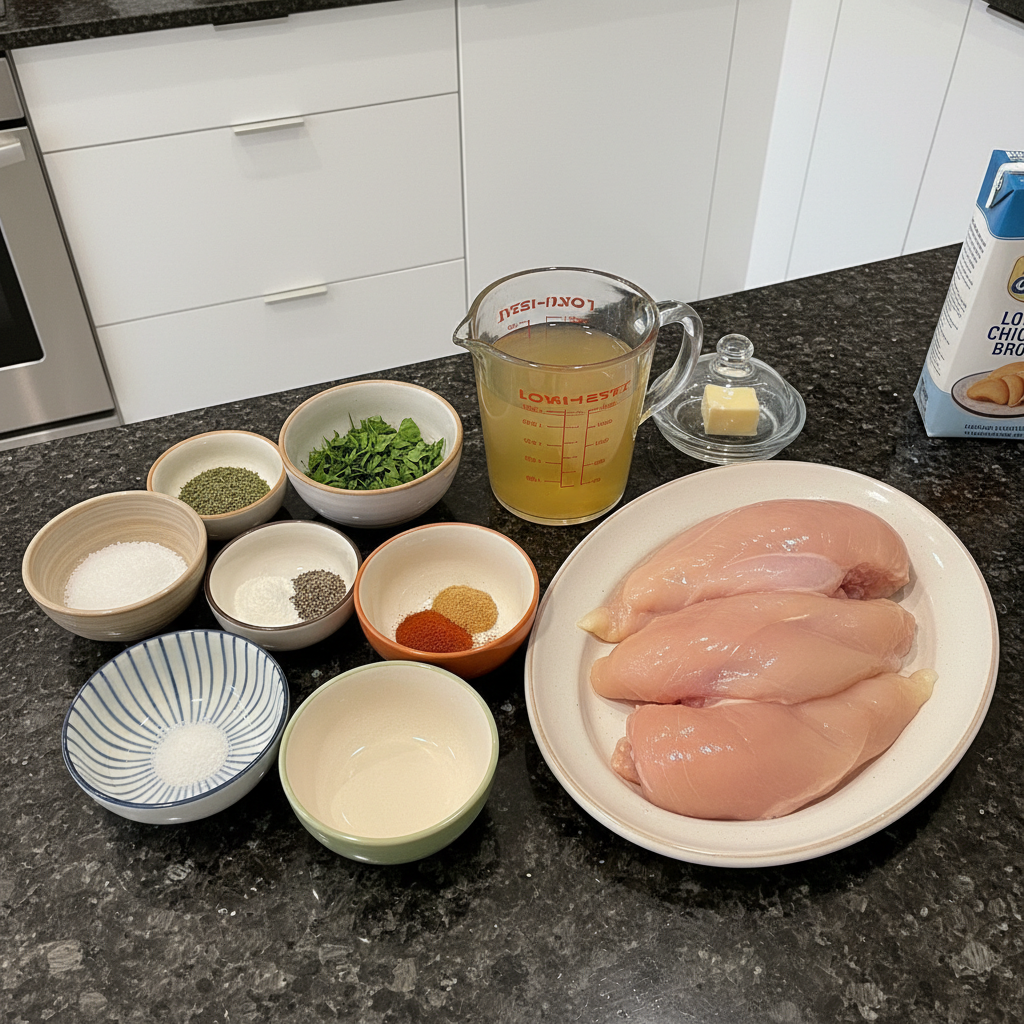
½ teaspoon salt
½ teaspoon dried parsley
¼ teaspoon garlic powder
⅛ teaspoon pepper
⅛ teaspoon onion powder
⅛ teaspoon paprika
¼ cup low-sodium chicken broth
4 boneless, skinless chicken breasts ((about 2 lbs))
1 tablespoon salted butter
Ingredient Notes & Substitutions
Boneless Skinless Chicken Breasts: When selecting boneless skinless chicken breasts, look for pieces that are roughly 6-8 ounces each for the most even cooking. Avoid any that appear pale, stiff, or have prominent white stripes, as these might indicate ‘woody breast’ syndrome, which we will discuss more later. Opt for plump, naturally colored, and pliable chicken.
Salted Butter: I recommend using salted butter or even margarine in this recipe. This helps to mimic the higher fat content found in chicken thighs, adding crucial moisture and richness to lean breast meat. If you only have unsalted butter, simply add a tiny pinch more salt to your spice rub.
Low-Sodium Chicken Broth: Low-sodium chicken broth is my preference for better control over the overall seasoning of the dish. However, if you are out, vegetable broth works perfectly well, or you can even use plain water. Just know that broth adds a lovely depth of flavor that water might lack.
Spices: The dry rub here is a savory classic, but feel free to customize it to your heart’s content. You could swap onion powder for a bit of fresh minced onion in the slow cooker or add a pinch of cayenne for a subtle kick. This is a great opportunity for flavor customization.
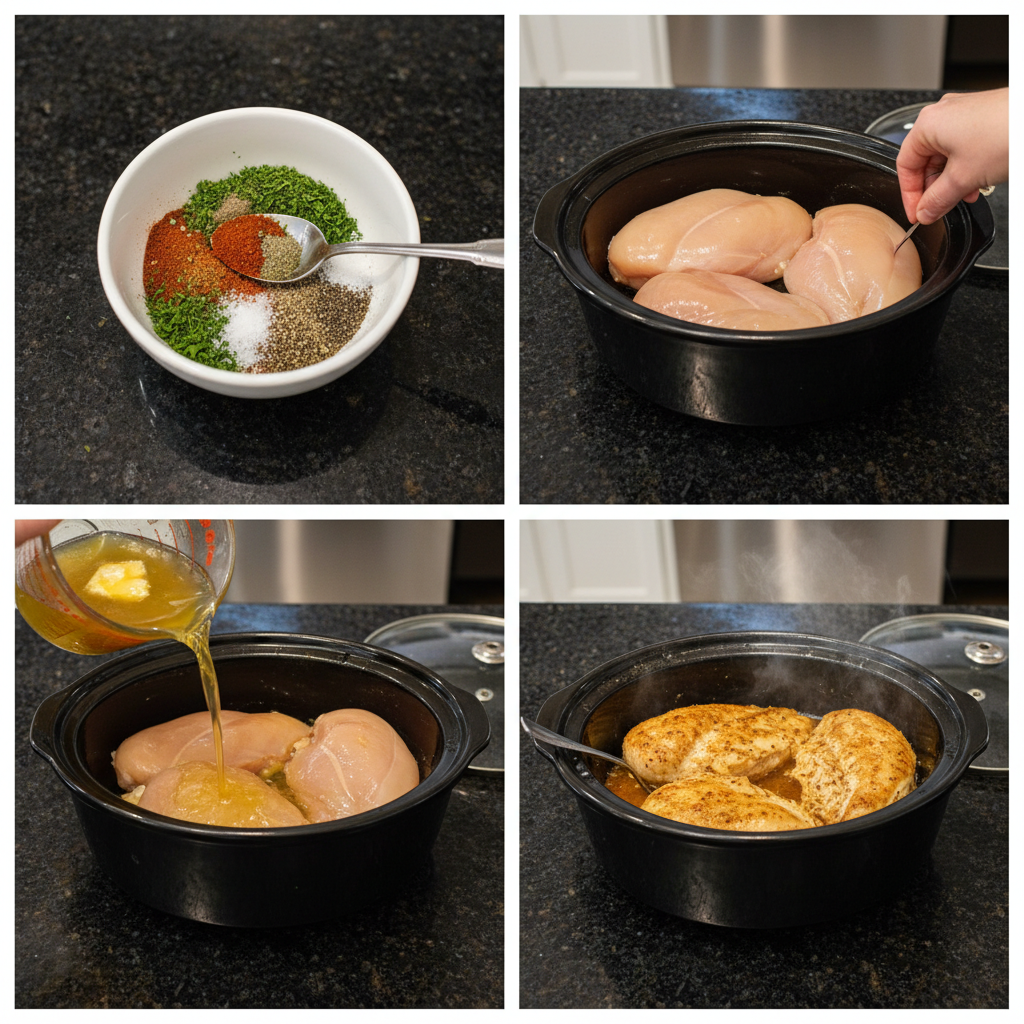
How to Make Juicy Slow Cooker Chicken Breasts
Cooking juicy slow cooker chicken breasts is simpler than you think with my special technique. Remember to use a reliable meat thermometer to ensure perfect doneness and food safety.
Prepare the Seasoning
In a small bowl, stir together the salt, dried parsley, garlic powder, pepper, onion powder, and paprika until well combined. This creates a fragrant rub. Season both sides of each boneless skinless chicken breast evenly with this savory mixture.
Add to Slow Cooker
Pour the chicken broth into the bottom of a 4- to 6-quart slow cooker. Arrange the seasoned boneless skinless chicken breasts in a single layer. For consistent results and to help with insulation, aim to fill your slow cooker at least half full. This helps it maintain temperature better.
Top with Butter
Cut the salted butter into small pieces. Distribute these pieces evenly over the top of the chicken breasts. As they cook, the butter will melt into golden pools, basting the chicken and adding extra richness.
Implement the Unique Twist: The Parchment Paper Steam Seal
This is the secret to guaranteed juiciness. After adding the butter, place a sheet of parchment paper directly on top of the chicken breasts. Ensure it covers them well before you cover the slow cooker with its lid. This simple step traps steam, preventing the chicken from drying out, especially on top.
Cook to Perfection
Cover the slow cooker with its lid. Cook on the low heat setting for 3 hours, or until a meat thermometer inserted into the thickest part of the chicken registers 165°F. It is crucial to use the low heat setting for chicken breasts; the ‘High’ setting can cook them too quickly and lead to dryness. Avoid lifting the lid during cooking, as this releases precious heat and steam, extending the cook time significantly.
Rest and Slice
Once the chicken reaches the desired internal temperature, carefully remove the cooked chicken to a clean cutting board. Cover it loosely, perhaps with foil, to keep it warm. Let the chicken rest for 10 minutes before slicing. This resting period is vital for carryover cooking and allows the juices to redistribute throughout the meat, ensuring maximum juiciness and cleaner cuts.
Mastering Juiciness: Temperature, Thawing & Meat Quality
Understanding a few key principles about cooking temperature, proper thawing, and even the quality of your raw chicken will elevate your slow cooker game to expert levels.
Achieving Perfect Doneness: The Power of Carryover Cooking
One of the biggest secrets to perfectly juicy chicken is understanding carryover cooking. This means that meat continues to cook even after it is removed from the heat source. For slow cooker chicken breasts, I recommend pulling the chicken from the slow cooker when its internal temperature reaches 160°F using a reliable meat thermometer. During the 10-minute resting period, the temperature will naturally rise to the safe 165°F (the FDA recommended temperature). This method prevents overcooking and results in significantly juicier chicken. A good meat thermometer is a non-negotiable tool in my kitchen for both food safety and achieving that perfect texture every time.
Safe & Quick Thawing for Slow Cooker Success
I must emphasize a critical food safety point: cooking frozen chicken in a slow cooker is generally not recommended. Frozen chicken takes too long to reach a safe temperature in a slow cooker, which can leave it in the ‘danger zone’ (between 40°F and 140°F) for an unsafe period, promoting bacterial growth.
Here are a few safe thawing techniques if you forgot to take your chicken out:
Refrigerator Thawing: This is always the best and safest method. Simply place your chicken in the refrigerator 24 hours before you plan to cook it. It thaws slowly and evenly.
Cold Water Thawing: This is the quickest safe method. Place the chicken in a leak-proof bag. Submerge the bag in a bowl of cold tap water, changing the water every 30 minutes to ensure it stays cold. A pound of chicken can thaw in about an hour. This rapid thawing minimizes time in the danger zone.
Microwave Thawing: You can use a microwave to thaw chicken, but it is best if you plan to cook the chicken immediately after. Microwaves can sometimes start to cook parts of the chicken while thawing others.
Proper thawing is a fundamental aspect of slow cooker fundamentals and food safety.
Understanding ‘Woody Breast’ Syndrome
Sometimes, despite your best efforts, chicken breasts can turn out tough or stringy. This might be due to a phenomenon known as ‘woody breast’ syndrome. It is a harmless but undesirable texture issue found in some commercially raised chicken breasts. The muscle fibers become stiff and rigid, which means they will not absorb marinades or cook to the same tender texture as normal chicken, no matter how carefully you prepare it.
To identify it when buying raw chicken, look for:
Pale color
A stiff, rigid feel
Visible white stripes or streaks across the breast
To avoid ‘woody breast’ syndrome, choose chicken breasts that are soft and pliable to the touch, with an even, pinkish color. This will give you the best chance for truly boneless skinless chicken breasts.
Pro Tips & Troubleshooting
Even with a reliable recipe, a few expert tips can make all the difference, and knowing what common mistakes to avoid will save you from kitchen disappointment.
Pro Tips for the Juiciest Chicken
- Right Size Slow Cooker: Match your slow cooker size to the quantity of chicken. A 4- to 6-quart slow cooker is perfect for 2 lbs of chicken, providing better insulation and even heat distribution. An oversized slow cooker for too few ingredients can dry out your chicken.
- Fill It Up: Aim to fill your slow cooker at least half full. This helps maintain a consistent cooking temperature and prevents rapid evaporation, which can lead to dry results.
- Stick to Low Heat: The low heat setting is your best friend for tender, juicy chicken breasts. High heat cooks them too fast, often resulting in tough, dry meat.
- Don’t Peek: Resist the urge to lift the lid! Every time you open the slow cooker, the internal temperature drops by 10-15 degrees, adding 20-30 minutes to your cooking time and allowing precious moisture to escape.
- Accurate Temperature: Always use a meat thermometer. Pull the chicken when it hits 160°F. The carryover cooking during the resting phase will bring it up to 165°F, ensuring juicy perfection.
- Enhance Fat & Flavor: Using salted butter or margarine helps add essential fat content, mimicking that of chicken thighs, which is key for moisture retention in lean breast meat.
- Brining for Beginners: For an advanced moisture boost, consider a short brine (about 1 hour in a simple salt water solution) before seasoning. This technique helps the chicken absorb more moisture, leading to incredibly tender results.
- The Parchment Paper Edge: Do not skip the unique parchment paper steam seal trick. It is the core of this recipe’s success in guaranteeing moist boneless skinless chicken breasts.
Common Mistakes to Avoid
- Cooking from Frozen: Never cook frozen chicken in a slow cooker. It is a food safety risk as the chicken spends too long in the danger zone. Always thaw completely first.
- Over-Sized Slow Cooker: Using a slow cooker that is too large for your amount of chicken can lead to rapid moisture evaporation and dry, tough edges.
- Frequent Lid Lifting: This is a major culprit for dry chicken. Keep the lid on to maintain consistent heat and trap steam.
- Using High Heat: While convenient, cooking chicken breasts on ‘High’ often results in tough and dry meat. Stick to ‘Low’ for optimal texture.
- Guessing Doneness: Judging doneness by eye is unreliable. A meat thermometer is essential for perfectly cooked and safe chicken.
- Skipping the Rest: Cutting chicken immediately after cooking causes the juices to run out onto your cutting board, leaving you with dry meat. Always rest for 10 minutes.
Serving & Storage
Once you have mastered juicy slow cooker chicken breasts, you will find they are an incredibly versatile ingredient for countless meals.
Serving Ideas
Meal Prep Powerhouse: Slice or shred the chicken for easy meal prep. It is fantastic in salads, sandwiches, wraps, grain bowls, or as a protein boost for weeknight dinners.
Comfort Food Sides: Serve your tender chicken over creamy garlic parmesan orzo, fluffy rice, mashed potatoes, or polenta. The simple flavors of the chicken complement almost anything.
Flavor Variations: Use the perfectly cooked chicken as a base for other meals. Shred it and toss with taco seasoning for taco style chicken, or brush with your favorite BBQ sauce for a delicious BBQ finish.
Easy Gravy: Do not let those delicious crockpot juices go to waste! Thicken them with a cornstarch slurry (1 tablespoon cornstarch mixed with 2 tablespoons cold water) for a light, flavorful gravy to serve over your chicken.
Garnishes: A sprinkle of fresh parsley or chives, or a squeeze of fresh lemon juice, can add a bright, finishing touch to your dish.
Storage and Make-Ahead
Refrigerator: Store any leftover cooked boneless skinless chicken breasts, whole or shredded, in an airtight container in the refrigerator for up to 3-4 days. This makes them perfect for quick lunches or dinners throughout the week.
Freezer: Cooked slow cooker chicken freezes beautifully for longer storage. Portion it into individual servings in freezer-safe bags or containers. It can be stored for up to 2-3 months. This is ideal for efficient meal prep.
Reheating Tips: To maintain the chicken’s juiciness, reheat gently. For sliced or shredded chicken, warm it in the microwave with a splash of chicken broth or water, or gently in a pan with a lid over low heat. Avoid high heat, which can quickly dry out the chicken.
Conclusion
Congratulations, you are now equipped to make unbelievably juicy slow cooker chicken breasts every time! By embracing the simple yet effective parchment paper steam seal, you will consistently achieve tender, moist results that defy the common dry chicken dilemma. Even beginners can master this technique, ensuring perfectly cooked chicken with confidence. I encourage you to experiment with different variations or serving ideas from my tips. Do not hesitate to share your delicious creations or questions in the comments below, and explore more slow cooker recipes on my blog!
FAQ
Why does my chicken come out dry even in a slow cooker?
Chicken often comes out dry in a slow cooker due to overcooking (not using a meat thermometer), using too high a heat setting, lifting the lid too often, or failing to use a method like the parchment paper steam seal to trap moisture. Lean boneless skinless chicken breasts are especially prone to drying out without careful cooking.
Is it safe to cook frozen chicken in a crockpot?
No, it is generally not recommended to cook frozen chicken in a slow cooker. The chicken spends too long in the danger zone (40-140°F) as it thaws and comes up to temperature, which poses a significant food safety risk. Always thaw your chicken completely using safe thawing techniques before placing it in the slow cooker.
How many hours should I cook chicken breasts on Low?
For boneless skinless chicken breasts, cooking on the low heat setting for about 3 hours is a good general guideline. However, the definitive indicator of doneness is always the internal temperature. Use a meat thermometer to check, and pull the chicken when it reaches 160°F, allowing it to rest and reach 165°F through carryover cooking for optimal juiciness.
What size slow cooker is best for 2 lbs of chicken?
A 4- to 6-quart slow cooker is ideal for cooking 2 lbs of boneless skinless chicken breasts. This size allows the chicken to fit in a single layer without being overcrowded or spread too thin. Aim to fill the slow cooker at least half full to provide better insulation and promote more even cooking.
Can I substitute the chicken broth with water or wine?
Yes, low-sodium chicken broth can be substituted. Water will work to provide moisture, and vegetable broth is another great option. For added flavor, a dry white wine can also be used. Remember that broth adds more savory depth than water, so adjust seasonings as needed.
Why is the parchment paper trick so effective for juicy chicken?
The parchment paper trick is incredibly effective because it creates a secondary, tighter seal directly over the chicken breasts. This traps steam more efficiently against the meat, preventing the top surface from drying out or becoming rubbery. It ensures maximum moisture retention throughout the cooking process.
How can I identify ‘woody breast’ syndrome when buying chicken?
You can identify ‘woody breast’ syndrome by observing the raw chicken. Look for breasts that appear pale, feel unusually stiff or rigid to the touch, and may have visible white stripes or streaks across the muscle. To avoid this issue, choose chicken that is pliable, soft, and has a consistent, natural pink color.
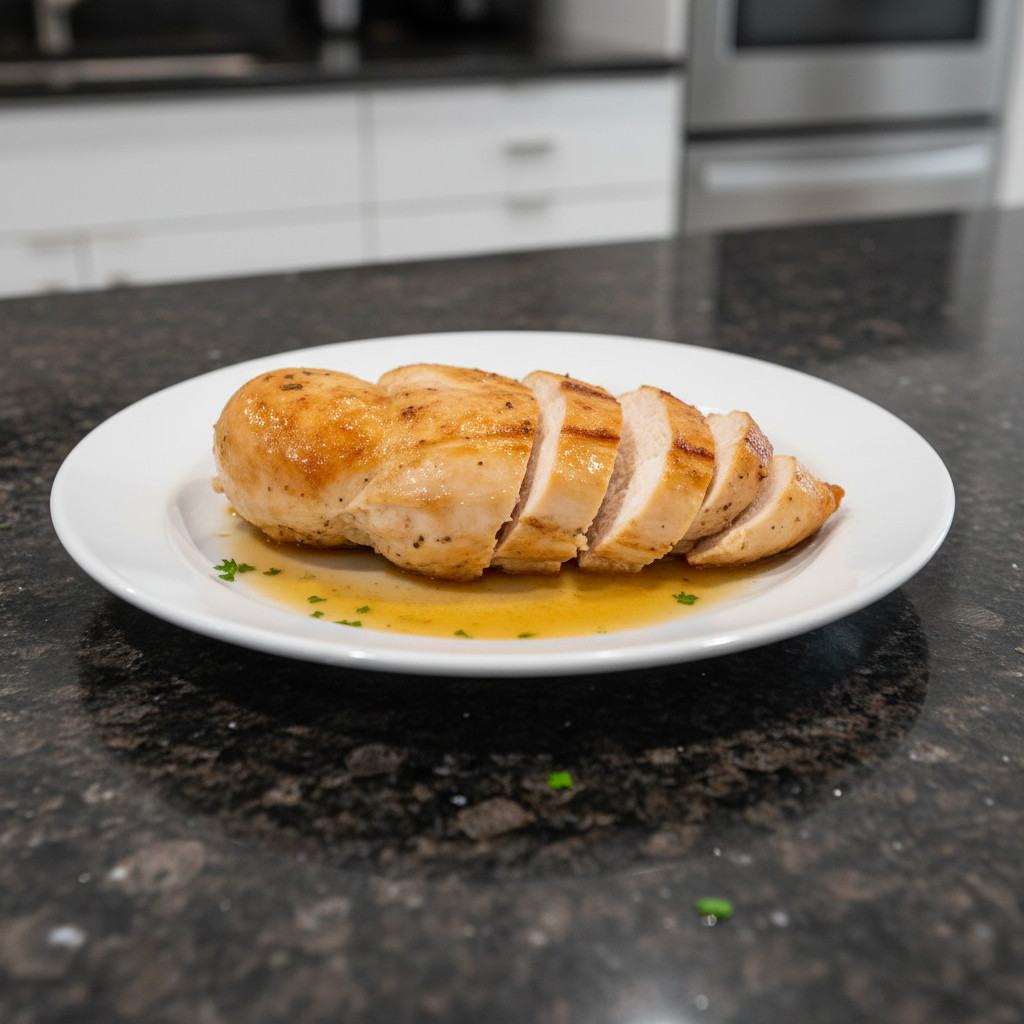
Juicy Slow Cooker Chicken Breasts: The Steam Seal Secret
Ingredients
Equipment
Method
- In a small bowl, stir together the salt, dried parsley, garlic powder, pepper, onion powder, and paprika until well combined. This creates a fragrant rub. Season both sides of each boneless skinless chicken breast evenly with this savory mixture.
- Pour the chicken broth into the bottom of a 4- to 6-quart slow cooker. Arrange the seasoned boneless skinless chicken breasts in a single layer. For consistent results and to help with insulation, aim to fill your slow cooker at least half full. This helps it maintain temperature better.
- Cut the salted butter into small pieces. Distribute these pieces evenly over the top of the chicken breasts. As they cook, the butter will melt into golden pools, basting the chicken and adding extra richness.
- After adding the butter, place a sheet of parchment paper directly on top of the chicken breasts. Ensure it covers them well before you cover the slow cooker with its lid. This simple step traps steam, preventing the chicken from drying out, especially on top.
- Cover the slow cooker with its lid. Cook on the low heat setting for 3 hours, or until a meat thermometer inserted into the thickest part of the chicken registers 165°F. It is crucial to use the low heat setting for chicken breasts; the 'High' setting can cook them too quickly and lead to dryness. Avoid lifting the lid during cooking, as this releases precious heat and steam, extending the cook time significantly.
- Once the chicken reaches the desired internal temperature, carefully remove the cooked chicken to a clean cutting board. Cover it loosely, perhaps with foil, to keep it warm. Let the chicken rest for 10 minutes before slicing. This resting period is vital for carryover cooking and allows the juices to redistribute throughout the meat, ensuring maximum juiciness and cleaner cuts.