There is nothing quite like a velvety, rich, and deeply savory risotto that reminds you of an authentic Italian restaurant. And the best part? You can achieve that perfect, creamy consistency right in your own kitchen with my One-Pot Mushroom Risotto recipe. Risotto has a reputation for being tricky, but I promise this guide simplifies the process into a reliable, one-pot method. You will learn the science behind the “perfect wave” texture, known as all’onda, and how to build a profound umami flavor without relying on meat stock.
Why You’ll Love This Recipe
My unique twist on this dish is what I call the Umami-Miso Emulsion. I discovered that a touch of white miso, while optional, creates a depth that vegetable broths often miss. This happens thanks to the synergistic interaction between the natural glutamates in mushrooms and the fermentation compounds in miso and Parmigiano-Reggiano, resulting in a wonderfully “meaty” savoriness.
When it comes to texture, this method guarantees an incredibly creamy result without a drop of heavy cream. It relies entirely on the proper release of starch from the rice grains, creating that luscious consistency we all crave.
This One-Pot Mushroom Risotto offers practical benefits that make it a favorite in my kitchen. It is cooked in a single pot, meaning minimal cleanup. It is completely vegetarian-friendly, delivering a deep savory flavor without needing beef broth. And despite its impressive restaurant-quality taste, it is surprisingly simple to make, perfect for a cozy date night or a comforting family dinner.
Ingredients Needed
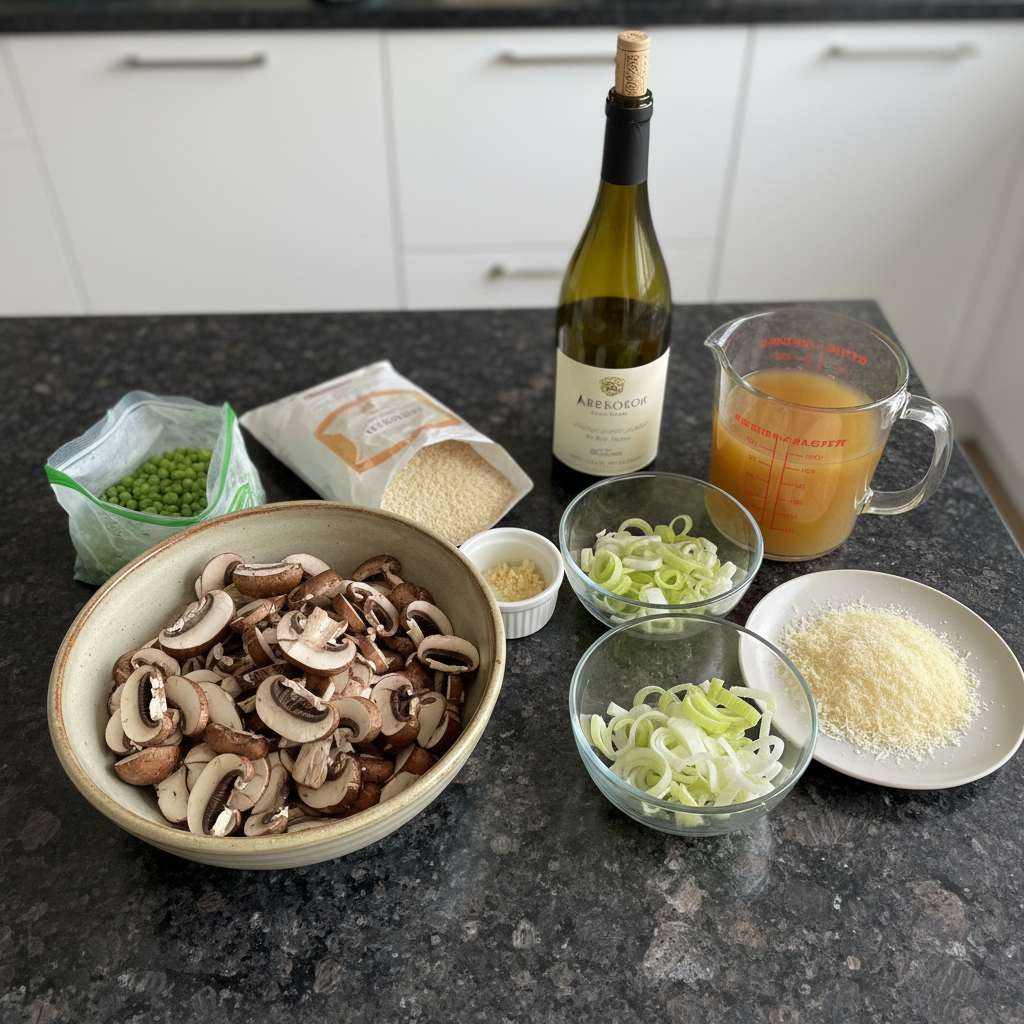
Here are the ingredients you will need to create this fantastic dish:
- 11oz / 400g mushrooms (I’ve used brown mushrooms)
- 1 medium leek sliced
- 2-3 garlic cloves diced
- 2-3 tbsp olive oil
- 1 ½ cups arborio rice
- ½ cup dry white wine
- 6.5 cups heated vegetable stock
- 2oz / 50g parmesan cheese
- 1 cup frozen green peas
- Salt and cracked black pepper
- Red pepper flakes (optional)
Ingredient Notes & Substitutions
Rice: Arborio rice is non-negotiable for beginners because of its high amylopectin content. This particular starch is essential for creating the creamy texture of risotto, unlike long-grain varieties.
Mushrooms: I recommend using Cremini mushrooms or Baby Bella for a deeper flavor profile compared to standard white button mushrooms. For an extra boost of umami, try my Chef’s Secret: whisk a spoonful of white miso into your heated stock.
Stock: The quality of your vegetable broth is paramount here, as it is the main flavor driver of the dish. Choose a high-quality, flavorful vegetable broth.
Wine: A dry white wine like Pinot Grigio or Sauvignon Blanc works wonderfully. If you prefer to cook without alcohol, simply use extra vegetable broth and add a squeeze of fresh lemon juice at the end for acidity.
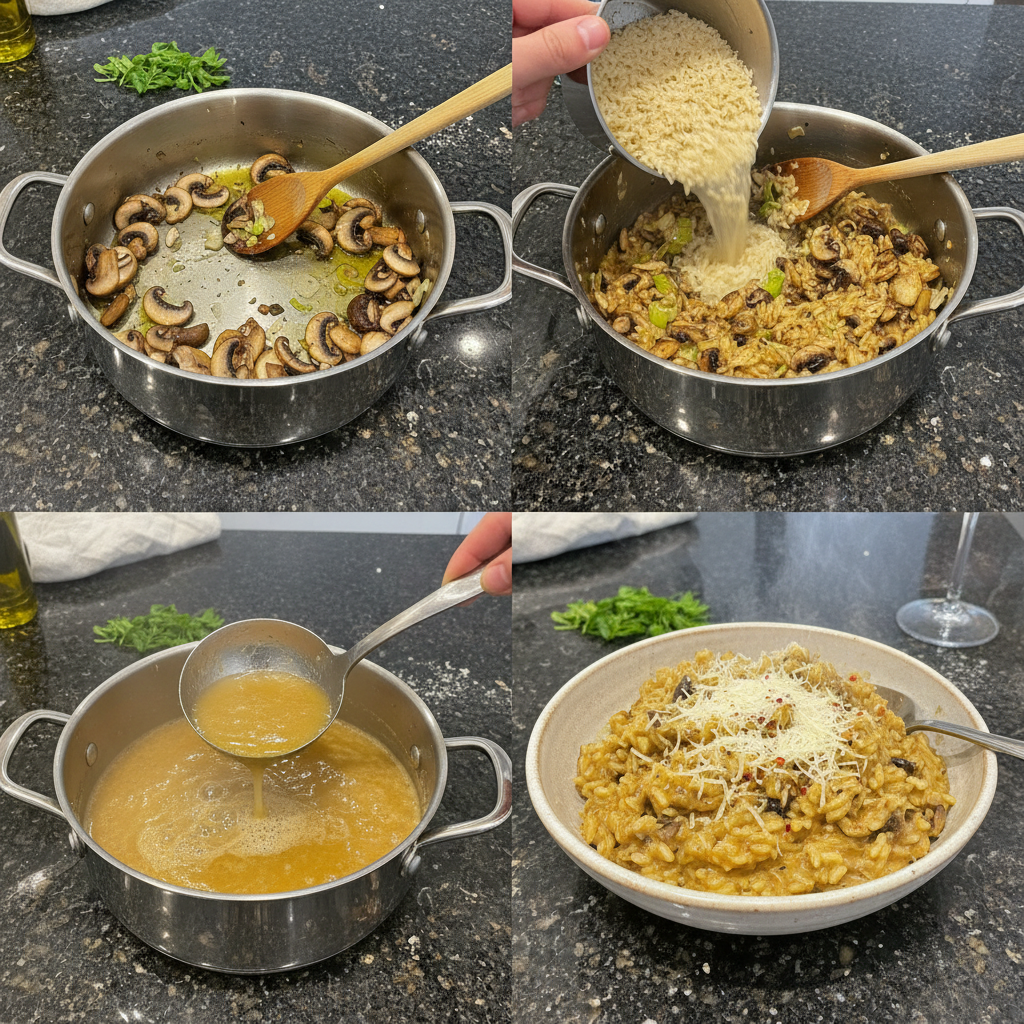
How to Make One-Pot Mushroom Risotto
Follow these steps to create your perfect creamy risotto:
Sauté the Mushrooms
First, slice your mushrooms and sauté them in a large pan with olive oil over high heat. Let them get beautifully browned, releasing their earthy aroma. Once they are browned, season them with a pinch of salt and pepper. Remove them from the pan and set them aside for now. Remember not to crowd the pan, as this ensures a good Maillard Reaction (browning) rather than steaming.
Aromatics
In the same pan, add another tablespoon of olive oil along with your sliced leek. Sauté the leek for a few minutes until it begins to soften. Then, add the diced garlic and sauté together until fragrant, filling your kitchen with wonderful aromas.
Toast the Rice (Crucial Step)
Keep the saucepan over medium heat. Add the arborio rice and sauté it together with the aromatics for a few minutes. This toasting process is crucial; it helps the rice grains hold their shape and structure as they cook. You will notice the edges of the grains become slightly translucent. Then, pour in the dry white wine, allowing it to deglaze the pan and release its wonderful acidity.
The Slow Simmer
Once the wine has almost entirely evaporated, add one ladle of the heated vegetable stock. Stir the mixture slowly, allowing it to simmer gently. As most of the liquid gets absorbed by the rice, add another ladle of stock. Continue this patient process of slowly stirring and adding one ladle of stock at a time. This consistent, gentle stirring helps release the starches needed for creaminess. Remember, your stock must be hot to avoid shocking the rice and interrupting the cooking process.
The Al Dente Test
When you are close to the end of your vegetable stock, typically around 15 minutes into the simmering process, taste the rice. It should be al dente, meaning it has a slight bite but is almost cooked through. If the rice is still crunchy or uncooked, you may need an additional 1-2 cups of heated stock. Once the rice is nearly perfect, grate in the parmesan cheese and stir it through with one last ladle of stock.
Finish and Serve
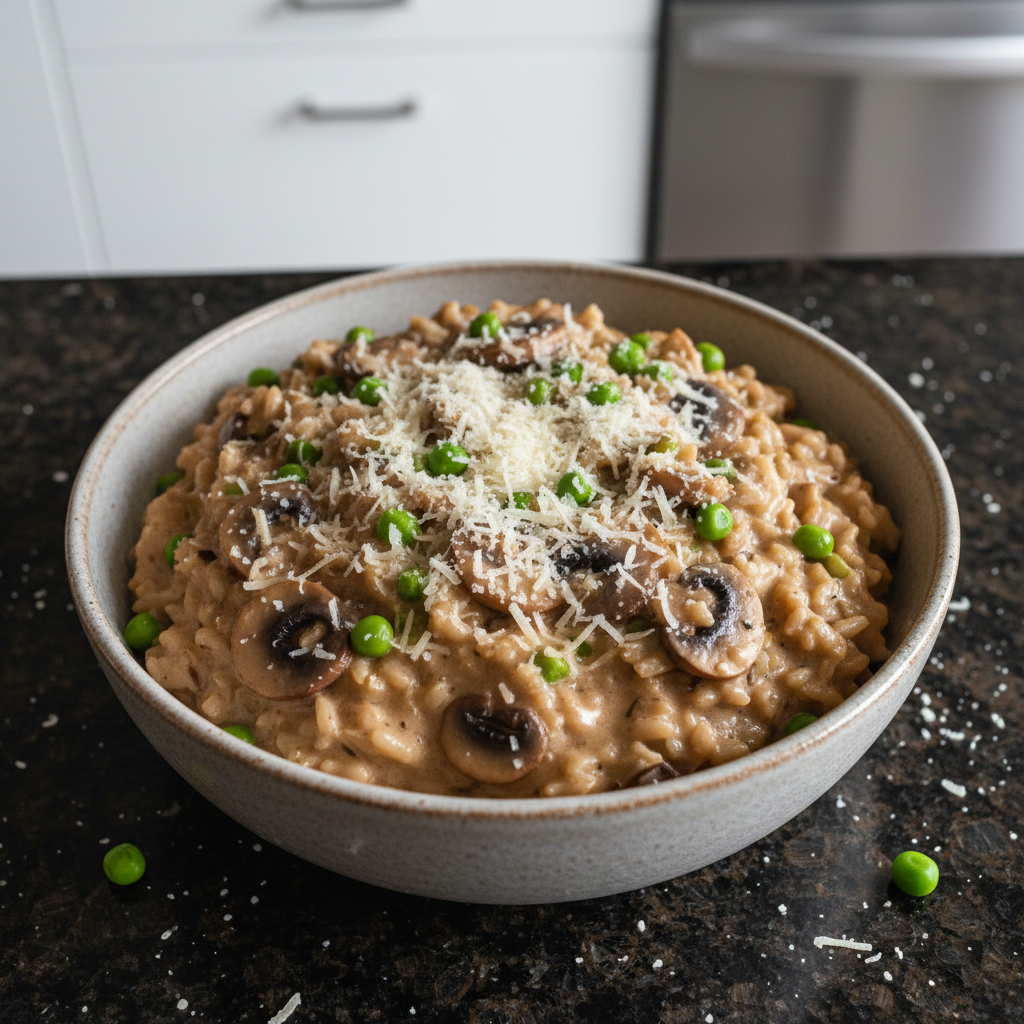
Finally, add the frozen green peas along with your sautéed mushrooms back into the risotto. Allow everything to cook together for just one minute, warming through. Your creamy Mushroom and Pea Risotto is now ready to serve! I love to serve it with extra grated parmesan cheese, a fresh crack of black pepper, and a sprinkle of red pepper flakes for a little kick. Enjoy!
The Science of Creamy Risotto
Understanding the science behind risotto helps you master it every time.
Why Gradual Liquid? The magic of creamy risotto comes from a starch called amylopectin, found abundantly in arborio rice. By adding stock slowly and stirring, you create gentle friction. This friction rubs the amylopectin starch off the surface of the rice grains, creating a natural, rich, and creamy sauce, essentially an emulsion, right in your pot.
Arborio vs. Carnaroli: While arborio rice is the standard and widely available choice in the US for risotto, I must mention Carnaroli. In Italy, Carnaroli is often considered the “king of rice” for risotto. It boasts an even higher starch content and a firmer grain, making it harder to overcook and resulting in an even creamier, more forgiving risotto. However, arborio rice is still an excellent choice for a delicious outcome.
The Importance of Heated Stock: This is a crucial detail that often gets overlooked. Your vegetable stock must be hot, maintained at a bare simmer on a separate burner. Adding cold stock to your cooking rice will shock the grains, stopping the cooking process abruptly. This interruption can prevent proper starch release and lead to a gluey, unevenly cooked texture.
Pro Tips & Troubleshooting
Chef’s Secrets for Success
The Miso Twist: For an unbelievably deep umami flavor that mimics meat stock, try this chef’s secret. Whisk 1 tablespoon of white miso paste into your heated vegetable stock before you begin cooking. Miso’s fermented properties, combined with the glutamates in the mushrooms, create a rich, savory experience that truly elevates this vegetarian dish.
Don’t Wash the Rice: Unlike many rice dishes, do not wash your arborio rice. The surface starch is vital for creating that signature creamy texture. Washing it away would diminish the very quality you are striving for.
Mantecatura: This Italian term refers to the final, critical step in making risotto. It involves vigorously stirring in cold fat, such as additional parmesan cheese, a pat of butter, or a drizzle of olive oil, right at the very end and off the heat. This technique emulsifies the starches and fat, giving the risotto its characteristic glossy, fluid finish.
Troubleshooting Common Mistakes
Rice is Crunchy: If your risotto rice is still crunchy, it is usually because you cooked it at too high a heat, causing the liquid to evaporate too quickly, or simply did not add enough liquid for the rice to fully absorb. Don’t worry, you can fix this! Add more hot water or stock, lower the heat, and continue to simmer and stir for another 2-3 minutes, testing until it reaches the desired al dente texture.
Rice is Mushy: Mushy risotto typically means it was overcooked or perhaps stirred too aggressively, breaking down the grains. For next time, start tasting your rice a bit earlier, around the 15-minute mark, and adjust your cooking time accordingly.
Lack of Flavor: Risotto relies heavily on well-seasoned liquid. If your risotto tastes bland, you likely under-salted your vegetable stock. Always taste and adjust the seasoning of your stock before you begin, and season the risotto throughout the cooking process.
Serving & Storage
Serving Ideas
Pairings: I love to serve this One-Pot Mushroom Risotto with a crisp, dry white wine, perhaps the same one you used in the cooking process. Its acidity helps cut through the richness of the dish beautifully.
Toppings: Elevate your serving with fresh herbs like thyme or parsley. For a truly luxurious touch, a drizzle of high-quality truffle oil adds an incredible aroma and flavor.
Storage & Reheating
Fridge: Store any leftover risotto in an airtight container in the refrigerator for up to 3 days. This ensures it remains fresh and safe to eat.
Reheating: Risotto can become dry and stiff when cold. To reheat, place it on the stove over medium-low heat with a splash of water or vegetable broth. Stir gently until it loosens up and becomes creamy again, coaxing the starches back into a sauce. Avoid microwaving on high heat, as this can make the rice rubbery.
Freezing: I advise against freezing risotto. The texture of the rice tends to degrade significantly upon thawing and reheating, becoming unpleasantly mushy.
Conclusion
You now have all the tools to create a restaurant-quality meal right in your own kitchen, all made conveniently in one pot with simple, wholesome ingredients. This Creamy One-Pot Mushroom Risotto is a testament to flavor and technique working in harmony.
I highly encourage you to try the Umami-Miso Twist for that extra savory punch that truly sets this dish apart. I would love for you to rate this recipe and share your own delicious variations. Perhaps you added some fresh spinach or asparagus? Let me know!
Frequently Asked Questions (FAQ)
What is the best rice for one-pot risotto?
Arborio rice is excellent due to its high starch content, and Carnaroli is also a top choice. Avoid varieties like Basmati, as they lack the necessary starch structure.
Can I make mushroom risotto without wine?
Yes, you certainly can. Simply substitute the wine with an equal amount of extra vegetable broth and add a squeeze of fresh lemon juice at the end for acidity.
Why is my risotto rice still crunchy after 20 minutes?
If your risotto rice is still crunchy, the heat might be too high, causing the liquid to evaporate too quickly before the grains have fully absorbed it. Try lowering the heat and adding more liquid, stirring until cooked.
How to make risotto creamy without adding heavy cream?
The creaminess comes from the natural starch release of the arborio rice through gradual liquid addition and constant stirring. The Mantecatura technique, which involves stirring in cold fat like parmesan at the very end, also enhances this creaminess.
Can I use regular white rice?
No, regular white rice varieties lack the necessary amylopectin starch structure required to achieve the characteristic creamy texture of risotto.
Creamy One-Pot Mushroom Risotto Recipe (Restaurant Quality)
Ingredients
Equipment
Method
- First, slice your mushrooms and sauté them in a large pan with olive oil over high heat. Let them get beautifully browned, releasing their earthy aroma.
- Once browned, season them with a pinch of salt and pepper. Remove them from the pan and set aside. Remember not to crowd the pan, as this ensures a good Maillard Reaction rather than steaming.
- In the same pan, add another tablespoon of olive oil along with your sliced leek. Sauté the leek for a few minutes until it begins to soften.
- Then, add the diced garlic and sauté together until fragrant, filling your kitchen with wonderful aromas.
- Keep the saucepan over medium heat. Add the arborio rice and sauté it together with the aromatics for a few minutes. This toasting process is crucial; it helps the rice grains hold their shape and structure as they cook. You will notice the edges of the grains become slightly translucent.
- Then, pour in the dry white wine, allowing it to deglaze the pan and release its wonderful acidity.
- Once the wine has almost entirely evaporated, add one ladle of the heated vegetable stock. Stir the mixture slowly, allowing it to simmer gently.
- As most of the liquid gets absorbed by the rice, add another ladle of stock. Continue this patient process of slowly stirring and adding one ladle of stock at a time. This consistent, gentle stirring helps release the starches needed for creaminess. Remember, your stock must be hot to avoid shocking the rice and interrupting the cooking process.
- When you are close to the end of your vegetable stock, typically around 15 minutes into the simmering process, taste the rice. It should be al dente, meaning it has a slight bite but is almost cooked through.
- If the rice is still crunchy or uncooked, you may need an additional 1-2 cups of heated stock. Once the rice is nearly perfect, grate in the parmesan cheese and stir it through with one last ladle of stock.
- Finally, add the frozen green peas along with your sautéed mushrooms back into the risotto. Allow everything to cook together for just one minute, warming through.
- Serve immediately with extra grated parmesan cheese, a fresh crack of black pepper, and a sprinkle of red pepper flakes for a little kick. Enjoy!