There’s nothing quite like a hearty bowl of comfort on a chilly evening, and for me, that often means a rich, satisfying soup. But not just any soup – I’m talking about the ultimate, deeply flavorful baked potato soup. It’s the kind of dish that hugs you from the inside out, reminiscent of your favorite loaded baked potato but in a velvety, spoonable form. Today, I’m sharing my absolute best recipe, designed to bring restaurant-quality baked potato soup right into your home kitchen, with a secret technique that promises unparalleled depth and creaminess.
Why You’ll Love This Baked Potato Soup
My kitchen philosophy always revolves around maximizing flavor with smart techniques, and this baked potato soup is a shining example. The true genius of this recipe lies in its unique twist:
- The Secret to Unrivaled Depth & Creaminess: We use oven-roasted Russet potatoes, blending their tender flesh directly into the soup base. This creates a naturally thicker, deeply flavorful, and incredibly creamy soup without relying on excessive flour or heavy cream.
- Intensified Potato Flavor: Roasting the potatoes caramelizes their natural sugars, developing a nutty, earthy depth that simply can’t be achieved by boiling. Blending this roasted flesh infuses every spoonful with rich, authentic potato essence.
- Hearty & Satisfying: This isn’t a thin, watery soup. It’s robust, fulfilling comfort food perfect for family meals or banishing winter blues, much like a good bowl of creamy chicken gnocchi soup.
- Surprisingly Easy to Make: Despite its gourmet taste, the steps are straightforward, making it accessible for home cooks of all levels.
- Versatile & Customizable: It’s a fantastic canvas for your favorite toppings and lends itself well to meal prepping.
Ingredients Needed
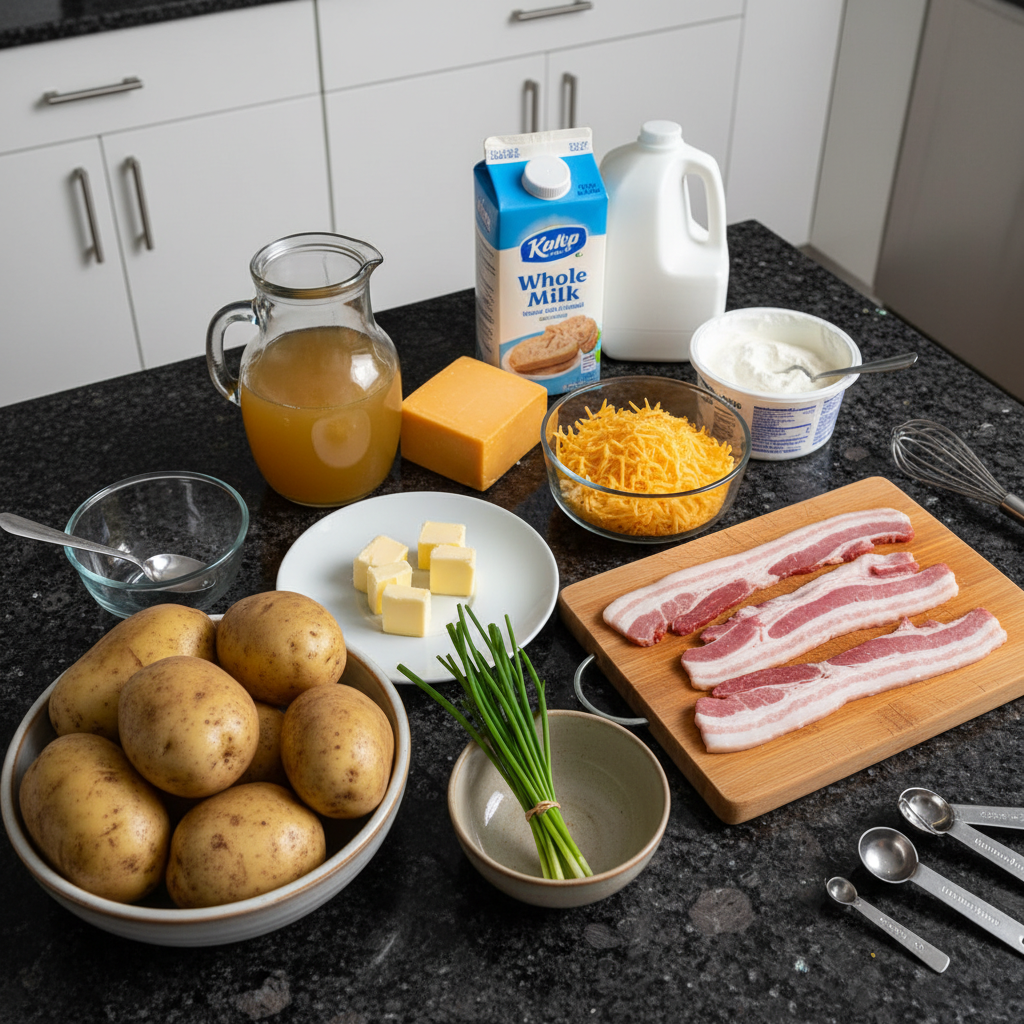
- 4 large Russet potatoes
- 6 slices thick-cut bacon, diced
- 1 large yellow onion, chopped
- 2 cloves garlic, minced
- 1/2 cup unsalted butter
- 1/2 cup all-purpose flour
- 6 cups low-sodium chicken broth
- 2 cups whole milk
- 1 cup heavy cream
- 1 teaspoon salt, or to taste
- 1/2 teaspoon black pepper, or to taste
- Optional garnishes: shredded sharp cheddar cheese, chopped fresh green onions, extra cooked crispy bacon, dollops of sour cream
Ingredient Notes & Substitutions
Let’s dive into some specifics to ensure your baked potato soup is absolutely perfect:
- Potatoes: I highly recommend using Russet potatoes. Their high starch content and fluffy texture when roasted make them ideal for blending into a creamy, thick soup base. If you prefer a slightly less starchy, more buttery flavor profile, Yukon Gold potatoes can also be used.
- Bacon: Opt for thick-cut bacon. It renders beautifully, providing incredible flavor and texture, both in the soup itself and as a crispy garnish. Don’t discard that precious bacon fat! Reserving about 2 tablespoons for sautéing your aromatics and building the roux adds unparalleled depth, a true expert tip for savory richness.
- Dairy: The combination of whole milk and heavy cream provides the signature richness and velvety texture of this baked potato soup. For a dairy-free option, you can substitute unsweetened almond, soy, or oat milk for the whole milk, and full-fat canned coconut milk (be aware of a subtle coconut flavor) or a plant-based heavy cream substitute for the heavy cream.
- Broth: Always go for low-sodium chicken broth. This allows you to control the seasoning precisely, preventing the soup from becoming too salty. For a vegetarian or vegan version, simply swap in vegetable broth.
- Thickeners: While we use a traditional flour roux for foundational body, the real thickening power and creaminess in this recipe come from the blended roasted potatoes. This unique twist builds a natural, full-bodied soup without excessive starch.
How to Make Roasted Potato Baked Potato Soup
Follow these steps closely, and you’ll be rewarded with the best baked potato soup you’ve ever made!
Phase 1: Roasting the Potatoes
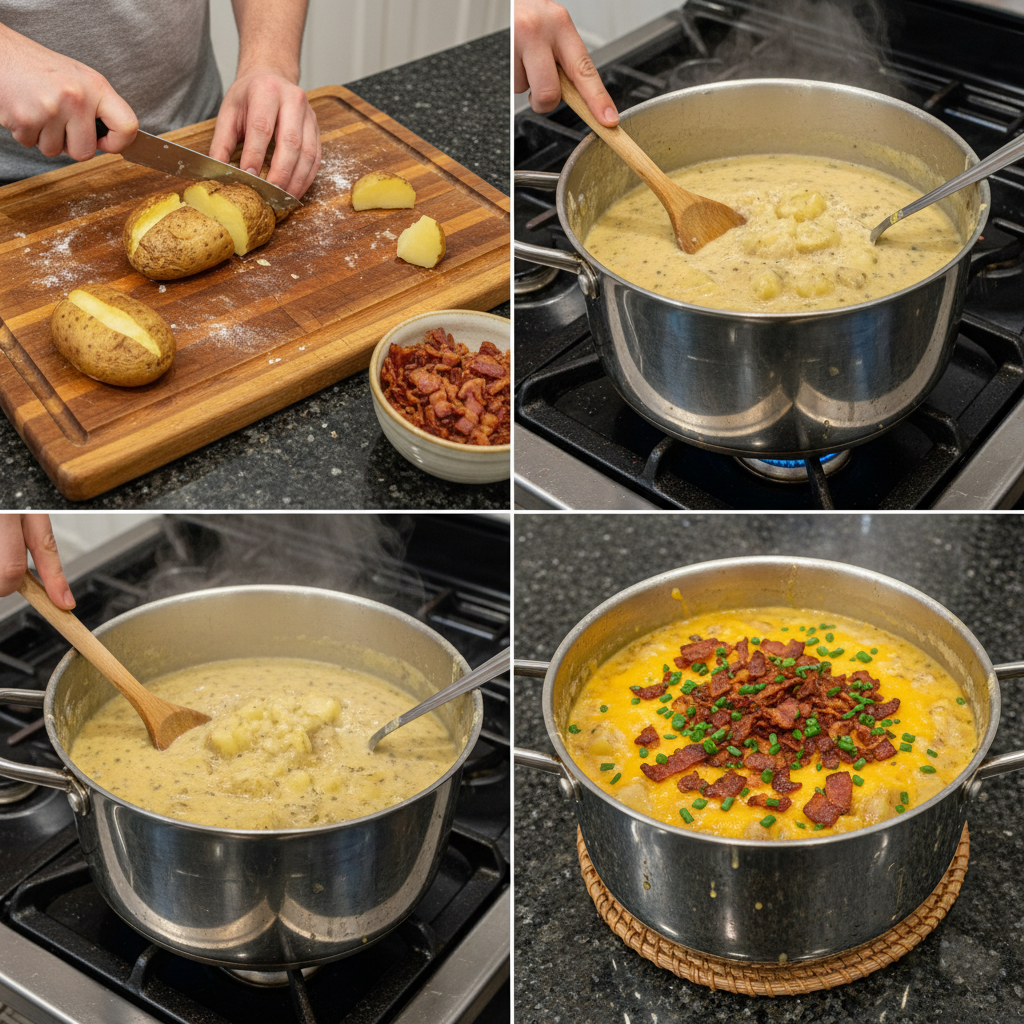
- Roast the Potatoes: Preheat your oven to a comforting 400°F (200°C). Take each of your Russet potatoes and pierce it several times with a fork. Place them directly on the oven rack and roast for 60-75 minutes, or until they are incredibly tender when squeezed. The skins will be wonderfully crispy, and the flesh inside soft and slightly caramelized. Let them cool slightly on a cutting board, then carefully cut them in half lengthwise. Scoop out all the creamy, tender flesh, reserving the crispy skins if you plan to bake them further for extra crunchy garnishes.
Phase 2: Building the Flavor Base
- Cook the Bacon: While your potatoes are roasting, dice your thick-cut bacon. Cook it in a large Dutch oven or heavy-bottomed pot over medium heat until it’s beautifully crispy and golden. Using a slotted spoon, carefully remove the cooked bacon and set it aside on a paper-towel lined plate to drain, leaving about 2 tablespoons of that flavorful rendered bacon fat in the pot for maximum flavor. This is an expert tip for truly rich soup!
- Sauté Aromatics: Add the chopped yellow onion to the pot with the hot bacon fat. Cook over medium heat for 5-7 minutes, stirring occasionally, until the onions are softened, translucent, and filling your kitchen with a sweet aroma. Stir in the minced garlic and cook for just another minute until it’s fragrant, being careful not to let it brown or burn.
- Make the Roux: Melt the unsalted butter into the pot with the softened aromatics. Once melted and shimmering, gradually whisk in the all-purpose flour to create a smooth roux. Continue to cook for 2 minutes, stirring constantly, until it forms a pale golden paste. This step is crucial for cooking out the raw flour taste and smell.
- Add Broth & Simmer: Slowly, and I mean slowly, pour in the low-sodium chicken broth, whisking continuously and vigorously as you do so. This prevents any lumps and ensures a silky, smooth soup base. Bring the mixture to a gentle simmer, then reduce the heat to low.
Phase 3: The Creamy Finish
- Blend in Roasted Potatoes: Now for our unique twist! Add the scooped roasted potato flesh to the pot. Using an immersion blender, blend the soup directly in the pot until it’s mostly smooth. I like to leave some small potato chunks for textural interest and a heartier feel. Alternatively, if you don’t have an immersion blender, carefully transfer portions of the soup to a regular blender and blend until you reach your desired consistency, then return it to the pot. This step is key for the unparalleled creaminess and deep flavor.
- Add Dairy & Season: Stir in the whole milk, heavy cream, salt, and black pepper. Heat the soup gently over low heat, stirring frequently, until it is warmed through and beautifully integrated. Crucially, do not allow the soup to come to a boil once the dairy has been added, as this can cause it to curdle. This is a common mistake to avoid for a perfectly smooth soup.
- Serve & Garnish: Taste your masterpiece and adjust seasonings as needed. Serve your glorious baked potato soup piping hot, generously garnished with a sprinkle of shredded sharp cheddar cheese, fresh chopped green onions, extra crispy bacon bits, and a cool dollop of sour cream or Greek yogurt.
Nutritional Insights & Dietary Adaptations
I believe in enjoying comforting food mindfully. Here’s how you can appreciate this baked potato soup and adapt it to your needs.
Understanding the Nutrition
While baked potato soup is a quintessential comfort food, known for its hearty and rich nature, it can certainly be part of a balanced diet. Potatoes themselves offer valuable nutrients like potassium and Vitamin C, and the bacon and cheese contribute protein and savory satisfaction. If you’re looking to lighten the recipe without sacrificing flavor, consider these simple adjustments:
- Use 2% or 1% milk instead of whole milk.
- Reduce the amount of bacon or opt for turkey bacon.
- Add more non-starchy vegetables like finely diced celery, carrots, or a handful of fresh spinach to the soup base.
- Replace some of the heavy cream with Greek yogurt stirred in at the very end for creaminess and a protein boost.
Making it Dairy-Free or Vegan
It’s surprisingly simple to transform this rich soup into a fantastic dairy-free option or even a full vegan delight:
- For Dairy-Free: Substitute the whole milk with an unsweetened plant-based milk like almond, soy, or oat milk. For the heavy cream, opt for full-fat canned coconut milk (be aware it might impart a subtle coconut flavor) or a store-bought plant-based heavy cream alternative. Remember to swap the chicken broth for vegetable broth to keep it entirely dairy-free.
- For Vegan: Follow all the dairy-free substitutions above. Omit the bacon entirely; instead, sauté your onions in olive oil or vegan butter. For garnishes, use vegan cheese shreds and a dollop of vegan sour cream. Nutritional yeast can also be added during the blending step for an extra cheesy, umami flavor without any dairy.
Make-Ahead, Freezing, & Reheating Tips
This baked potato soup is a fantastic candidate for meal prep, making those busy weeknights a little easier.
Preparing in Advance
You can streamline the cooking process significantly with some strategic make-ahead prep:
- Roast Potatoes: Roast and scoop the potato flesh up to 2 days in advance. Store the cooled flesh in an airtight container in the refrigerator.
- Cook Bacon: Cook and crumble your bacon, storing it separately in an airtight container in the fridge. This keeps it crispy until serving.
- Chop Aromatics: Chop your onions and mince your garlic a day ahead.
- Full Soup: The entire soup can be made a day in advance and reheated gently, allowing the flavors to meld even further.
Freezing for Later
This soup is wonderfully freezer-friendly, perfect for having a comforting meal ready to go:
- Allow the soup to cool completely to room temperature before portioning it into freezer-safe containers or heavy-duty freezer bags.
- Freeze for up to 2-3 months.
- Important Note: Dairy-based soups can sometimes separate slightly or become a bit grainy after freezing and thawing. To minimize this, reheat slowly and gently on the stovetop, whisking frequently. You may find that adding a splash of fresh milk or cream during reheating helps to restore the desired consistency.
Reheating Leftovers
Proper reheating is key to maintaining the soup’s luxurious texture:
- Stovetop: If frozen, thaw the soup in the refrigerator overnight. Reheat gently over low to medium-low heat on the stovetop, stirring frequently to prevent scorching and re-emulsify any separated dairy. If the soup is too thick, add a splash of warm milk, cream, or broth until it reaches your desired consistency. Crucially, do not boil.
- Microwave: Reheat smaller portions in microwave-safe bowls in 1-2 minute intervals, stirring well between each interval, until heated through. Again, add a little liquid if needed to adjust thickness.
Pro Tips & Common Mistakes to Avoid
Even seasoned chefs have their secrets and lessons learned. Here are my top tips for absolute perfection and how to sidestep common pitfalls when making baked potato soup.
Pro Tips for Perfection
- Choose the Right Potato: As I mentioned, Russet potatoes are highly recommended for their fluffy texture, which blends beautifully and absorbs flavors exceptionally well. This creates that iconic creamy texture when roasted, reinforcing our unique twist.
- Utilize Bacon Drippings: This is non-negotiable! Always use the rendered bacon fat to sauté your onions and build the roux. It adds an unparalleled depth of savory flavor that elevates the entire soup, a true expert tip for maximum deliciousness.
- Season in Layers: Don’t wait until the very end to season. Add a pinch of salt and pepper when cooking the onions, and another when simmering the broth. This builds complex flavor throughout and prevents any hint of blandness. Taste and adjust often!
- Control Blending: Blend the roasted potatoes until mostly smooth, but do consider leaving a few small chunks. This provides a pleasant textural contrast and a heartier feel, enhancing the overall experience.
- Temper Your Dairy: This is a game-changer! Before adding cold milk and cream to the hot soup, take a small ladle of the hot soup base and whisk it into the cold dairy. Then, slowly pour the tempered dairy mixture back into the pot. This equalizes temperatures and significantly reduces the risk of curdling.
- Fresh Garnishes are Key: Always add garnishes like crispy bacon, fresh green onions, and shredded cheese just before serving to ensure they remain fresh, flavorful, and visually appealing.
Common Mistakes to Avoid
- Over-boiling Dairy: One of the most common mistakes is allowing the soup to come to a rolling boil after the milk and heavy cream have been added. This will almost certainly cause the dairy to curdle, creating an unappetizing, separated texture. Always heat gently over low heat.
- Not Roasting the Potatoes: Boiling potatoes instead of roasting them misses out on the incredible flavor depth, natural sweetness, and superior texture that our unique twist brings. Boiled potatoes yield a comparatively starchy, less complex flavor.
- Blandness: Neglecting to season at each stage of cooking will result in a flat, bland soup. Taste and adjust constantly – your palate is your best guide!
- Too Thin or Too Thick: If your soup is too thin, you can simmer it gently to reduce, or add a cornstarch slurry (1 tbsp cornstarch mixed with 2 tbsp cold water). If it’s too thick, simply add more warm broth or milk a little at a time until your desired consistency is reached.
- Soggy Garnishes: Adding crispy bacon or fresh herbs too early will make them soggy. Always add them at the last minute for maximum impact in both texture and flavor.
Serving & Storage
Presentation and thoughtful pairings can truly elevate your homemade baked potato soup experience.
Serving Suggestions & Garnishes
- Classic Garnishes: Load it up! Think generous handfuls of shredded sharp cheddar cheese, fragrant fresh chopped green onions or chives, plenty of crunchy crispy bacon bits, and a cool dollop of rich sour cream or even Greek yogurt for a slight tang.
- Hearty Companions: Serve this creamy soup alongside warm, crusty bread for dipping, or go all out with hollowed-out bread bowls for a truly immersive and delicious experience. A light side salad with a vinaigrette dressing can also beautifully cut through the richness of the soup.
- Drink Pairings: A crisp Sauvignon Blanc offers a refreshing contrast to the soup’s richness, or a simple iced tea works wonderfully.
- Presentation: Always serve your soup in warm bowls for optimal enjoyment.
Storage & Make-Ahead Tips
Ensuring your delicious soup lasts and retains its quality is simple with these guidelines:
- Refrigerator Storage: Allow the soup to cool completely to room temperature before transferring it to airtight containers. Store it in the refrigerator for up to 3-4 days.
- Freezer Storage: For detailed freezer-friendly instructions and tips to prevent texture changes due to dairy, please refer to the “Make-Ahead, Freezing, & Reheating Tips” section above.
- Reheating Instructions: To ensure your soup remains creamy and avoids curdling, always follow the best practices for reheating outlined in the “Make-Ahead, Freezing, & Reheating Tips” section.
- Meal Prep: This baked potato soup is an excellent make-ahead option, making it perfect for easy weeknight dinners or comforting lunches, aligning perfectly with smart meal prep strategies.
Conclusion
My hope is that this recipe transforms your perception of homemade soup. By embracing the unique twist of roasting and blending Russet potatoes, we unlock an incredible depth of flavor and natural creaminess that sets this baked potato soup apart. It’s a truly gourmet experience that feels wonderfully comforting and is surprisingly straightforward to prepare. So, gather your ingredients, fire up that oven, and treat yourself and your loved ones to a bowl of this unbelievably rich and satisfying soup. Don’t forget to experiment with your favorite topping ideas to make it uniquely yours! Happy cooking!
FAQ (Frequently Asked Questions)
- Q: How do I thicken baked potato soup without adding more flour?
- A: This recipe naturally thickens beautifully thanks to the blended roasted potatoes, which contribute both flavor and body. If you desire extra thickness, you can simmer the soup gently for a bit longer to allow it to reduce, or blend in a bit more roasted potato. A cornstarch slurry (1 tbsp cornstarch mixed with 2 tbsp cold water) can be used as a last resort, but often isn’t necessary with this method.
- Q: What kind of potatoes work best in baked potato soup?
- A: For the ultimate creamy body and deep flavor, Russet potatoes are ideal. Their high starch content makes them fluffy and perfect for roasting and blending, contributing significantly to the soup’s luxurious texture. While Yukon Gold potatoes can also be used for a slightly more buttery, less starchy result, Russets truly shine in this recipe. For another take on this classic, check out our ultimate creamy potato soup.
- Q: Can baked potato soup be made in advance?
- A: Absolutely! This baked potato soup is an excellent make-ahead option. You can prepare it fully a day in advance and gently reheat it before serving. For more detailed preparation tips, refer to the “Make-Ahead, Freezing, & Reheating Tips” section.
- Q: How long does baked potato soup last in the refrigerator?
- A: When stored properly in an airtight container, homemade baked potato soup will last for 3-4 days in the refrigerator.
- Q: What are the best toppings for baked potato soup?
- A: The classics are always a hit: crunchy crispy bacon bits, generous handfuls of rich shredded sharp cheddar cheese, fresh green onions or chives, and a cool dollop of sour cream or Greek yogurt. Feel free to get creative with other additions like jalapeños or chicharrones!
- Q: Is baked potato soup freezer-friendly?
- A: Yes, baked potato soup is generally freezer-friendly! Just be sure to cool it completely before freezing in airtight containers. Dairy-based soups can sometimes have slight texture changes upon thawing, so I recommend reviewing the “Make-Ahead, Freezing, & Reheating Tips” section for optimal reheating advice to maintain that creamy texture.
- Q: Can I make this baked potato soup vegetarian or vegan?
- A: Yes, easily! You can adapt this recipe to be vegetarian or vegan with a few simple swaps. Please refer to the “Nutritional Insights & Dietary Adaptations” section for specific guidance on replacing ingredients like chicken broth, dairy, and bacon with plant-based alternatives.
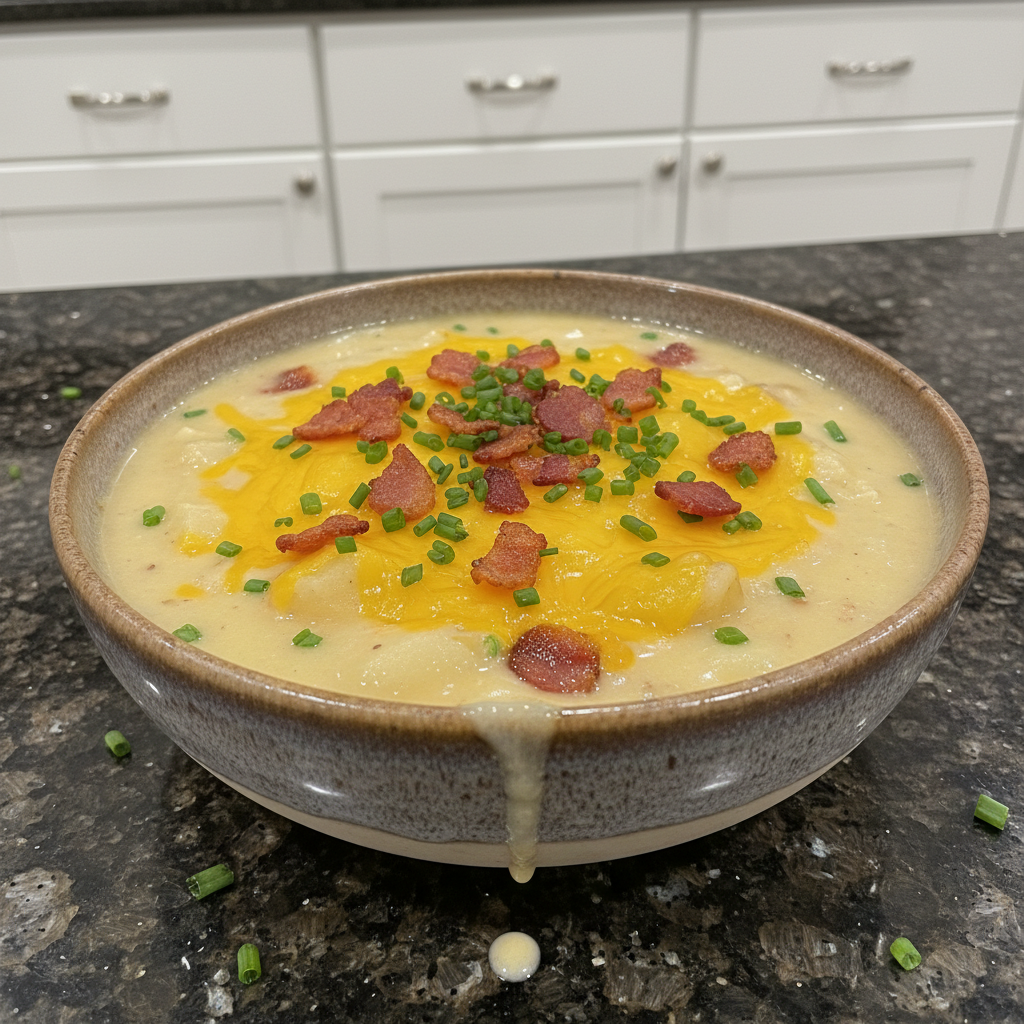
Best Creamy Baked Potato Soup Recipe with Roasted Potatoes
Ingredients
Equipment
Method
- Roast the Potatoes: Preheat your oven to a comforting 400°F (200°C). Take each of your Russet potatoes and pierce it several times with a fork. Place them directly on the oven rack and roast for 60-75 minutes, or until they are incredibly tender when squeezed. Let them cool slightly, then carefully cut them in half lengthwise. Scoop out all the creamy, tender flesh, reserving the crispy skins if you plan to bake them further for extra crunchy garnishes.
- Cook the Bacon: While your potatoes are roasting, dice your thick-cut bacon. Cook it in a large Dutch oven or heavy-bottomed pot over medium heat until it’s beautifully crispy and golden. Using a slotted spoon, carefully remove the cooked bacon and set it aside on a paper-towel lined plate to drain, leaving about 2 tablespoons of that flavorful rendered bacon fat in the pot.
- Sauté Aromatics: Add the chopped yellow onion to the pot with the hot bacon fat. Cook over medium heat for 5-7 minutes, stirring occasionally, until the onions are softened and translucent. Stir in the minced garlic and cook for just another minute until it's fragrant, being careful not to let it brown or burn.
- Make the Roux: Melt the unsalted butter into the pot with the softened aromatics. Once melted and shimmering, gradually whisk in the all-purpose flour to create a smooth roux. Continue to cook for 2 minutes, stirring constantly, until it forms a pale golden paste.
- Add Broth & Simmer: Slowly pour in the low-sodium chicken broth, whisking continuously and vigorously to prevent any lumps. Bring the mixture to a gentle simmer, then reduce the heat to low.
- Blend in Roasted Potatoes: Add the scooped roasted potato flesh to the pot. Using an immersion blender, blend the soup directly in the pot until it's mostly smooth. You can leave some small potato chunks for textural interest. If you don't have an immersion blender, carefully transfer portions of the soup to a regular blender and blend until desired consistency, then return to the pot.
- Add Dairy & Season: Stir in the whole milk, heavy cream, salt, and black pepper. Heat the soup gently over low heat, stirring frequently, until it is warmed through and beautifully integrated. Crucially, do not allow the soup to come to a boil once the dairy has been added, as this can cause it to curdle.
- Serve & Garnish: Taste and adjust seasonings as needed. Serve your glorious baked potato soup piping hot, generously garnished with a sprinkle of shredded sharp cheddar cheese, fresh chopped green onions, extra crispy bacon bits, and a cool dollop of sour cream or Greek yogurt.