There’s nothing quite like a steaming bowl of homemade soup to bring warmth and comfort to any day. Imagine a rich, savory, and incredibly hearty spoonful, loaded with crispy bacon, melted cheesy goodness, and tender potatoes. That, my friends, is the ultimate comfort food experience I promise you today. I’m so excited to share my go-to loaded potato soup recipe, designed to be both deliciously easy to follow and brimming with valuable insights for achieving perfection. Get ready to master a truly superior soup, elevated by a unique, texture-rich topping that will make every spoonful unforgettable.
Why You’ll Love This Recipe
In my kitchen, I’m always looking for ways to elevate classic comfort dishes, and this loaded potato soup is no exception. While the creamy base and classic toppings are divine, the true game-changer here is A Crispy Herb & Garlic Crouton Topping . This isn’t just an afterthought; it’s a deliberate choice that introduces a garlicky, herbaceous, and intensely crispy element, creating a beautiful contrast with the rich, creamy soup.
The croutons are designed to absorb some of the soup’s liquid while heroically retaining their crunch, adding both textural complexity and a fresh, aromatic note often missing from traditional potato soup toppings. Toasting them in butter enhances their flavor through the amazing Maillard reaction, developing deep, savory notes.
Beyond this unique twist, you’ll adore this recipe because it’s the ultimate comfort food , making it perfect for cozy family dinners. It’s surprisingly easy to make , even for beginner cooks, and incredibly satisfying, thanks to generous amounts of crispy bacon, savory yellow onion, fresh garlic cloves, and plenty of shredded cheddar cheese. This is a soup that truly delivers on flavor, texture, and pure culinary joy.
Ingredients Needed
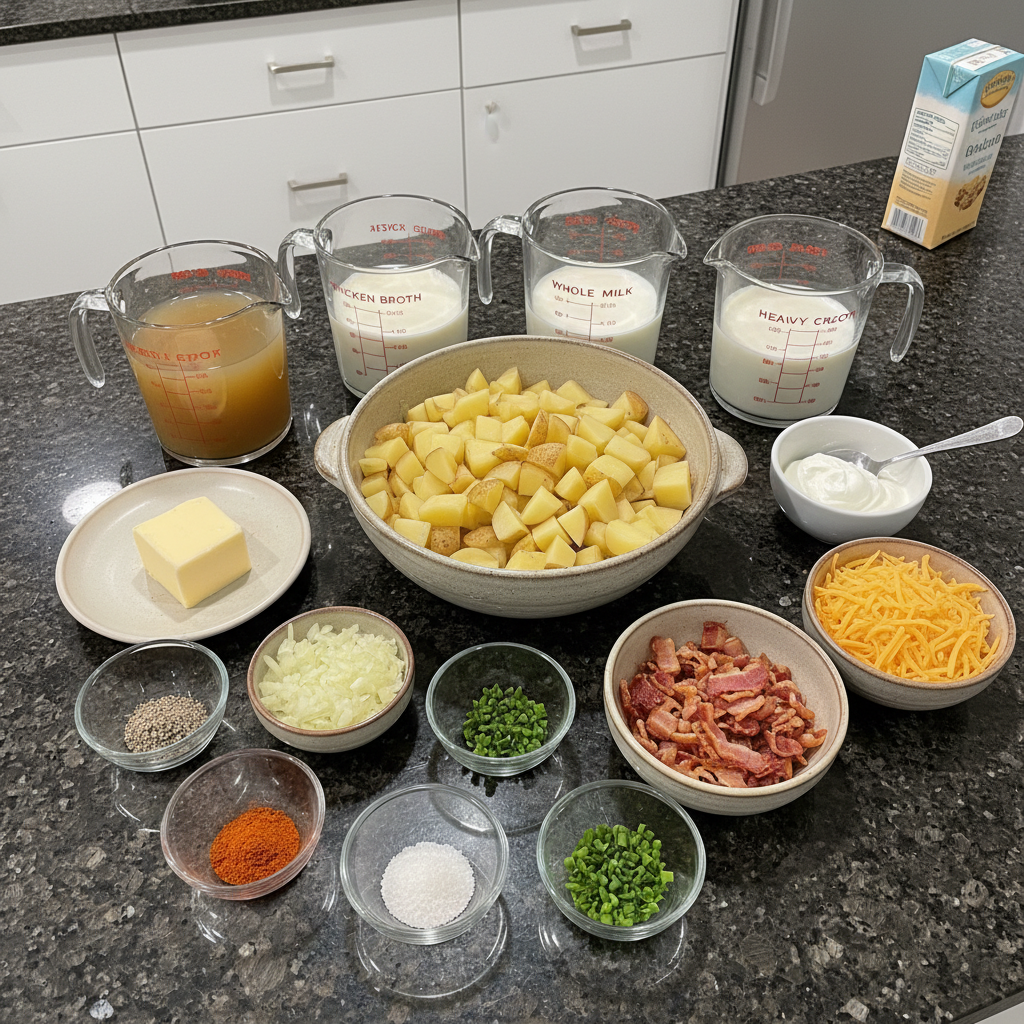
Here’s what you’ll need to create this comforting masterpiece:
- 6 strips (uncooked) bacon cut into small pieces
- 3 Tablespoons butter unsalted or salted will work
- 1 medium yellow onion chopped (about 1.5 cup/200g)
- 3 large garlic cloves minced
- ⅓ cup all-purpose flour (42g)
- 2 ½ lbs gold potatoes peeled and diced into pieces no larger than 1” (this was about 6 Large potatoes for me/1.15kg)
- 4 cups chicken broth (945ml)
- 2 cups milk (475ml)
- ⅔ cup heavy cream (155ml)
- 1 ½ teaspoon* salt
- 1 teaspoon ground pepper
- ¼ – ½ teaspoon ancho chili powder
- ⅔ cup sour cream (160g)
- Shredded cheddar cheese, chives, and additional sour cream and bacon for topping optional
Ingredient Notes & Substitutions
- Gold potatoes: I highly recommend using Gold potatoes for this recipe. Their slightly waxy texture gives a creamy consistency while holding their shape beautifully, offering that lovely creamy-chunky texture we’re aiming for. While Russet potatoes are fantastic for mashing, they can break down more easily in a soup, potentially leading to a starchier, more uniformly blended result. When choosing the right potatoes, Gold varieties are consistently a winner for this kind of soup.
- Dairy choices (Milk, Heavy Cream, Sour Cream): Each dairy component plays a crucial role. The milk forms part of our liquid base, adding richness; whole milk is ideal. Heavy cream is what truly gives this soup its luxurious body and velvety mouthfeel, and it’s less likely to curdle under heat. Sour cream introduces a delightful tanginess and contributes to the overall thickness. For a dairy-free variation, you can explore unsweetened full-fat coconut milk or a cashew cream blend for richness, and a plant-based sour cream alternative for tang, keeping in mind the texture may vary slightly. These substitutions can also make for a delicious vegetarian option if you omit the bacon and use vegetable broth.
- Chicken broth: I always opt for low-sodium chicken broth. This allows me to control the seasoning precisely and avoids the common mistake of over-salting the soup early on. Taste and adjust!
- Flour: Our all-purpose flour creates a classic roux, a thickening agent that gives the soup its body. For a Gluten-free variation, you can easily substitute cornstarch (mixed with a little cold water to form a slurry) or a gluten-free flour blend. Add these alternatives slowly towards the end of cooking until your desired thickness is achieved.
- Ancho chili powder: This secret ingredient adds a wonderfully subtle smokiness and depth of flavor without making the soup spicy. It’s an expert tip: start with ¼ teaspoon and taste, then add more if you like. It truly enhances the savory notes.
- Garlic cloves & Onion: For efficient preparation, I suggest mincing your garlic cloves finely and chopping your yellow onion into consistent pieces. This ensures they cook evenly and infuse the soup with maximum flavor.
How to Make Loaded Potato Soup
Let’s get cooking! Here’s how I bring this ultimate comfort food to life in my kitchen.
Phase 1: Crisping the Bacon and Building the Flavor Base
First, grab your largest Dutch Oven or a sturdy soup pot.
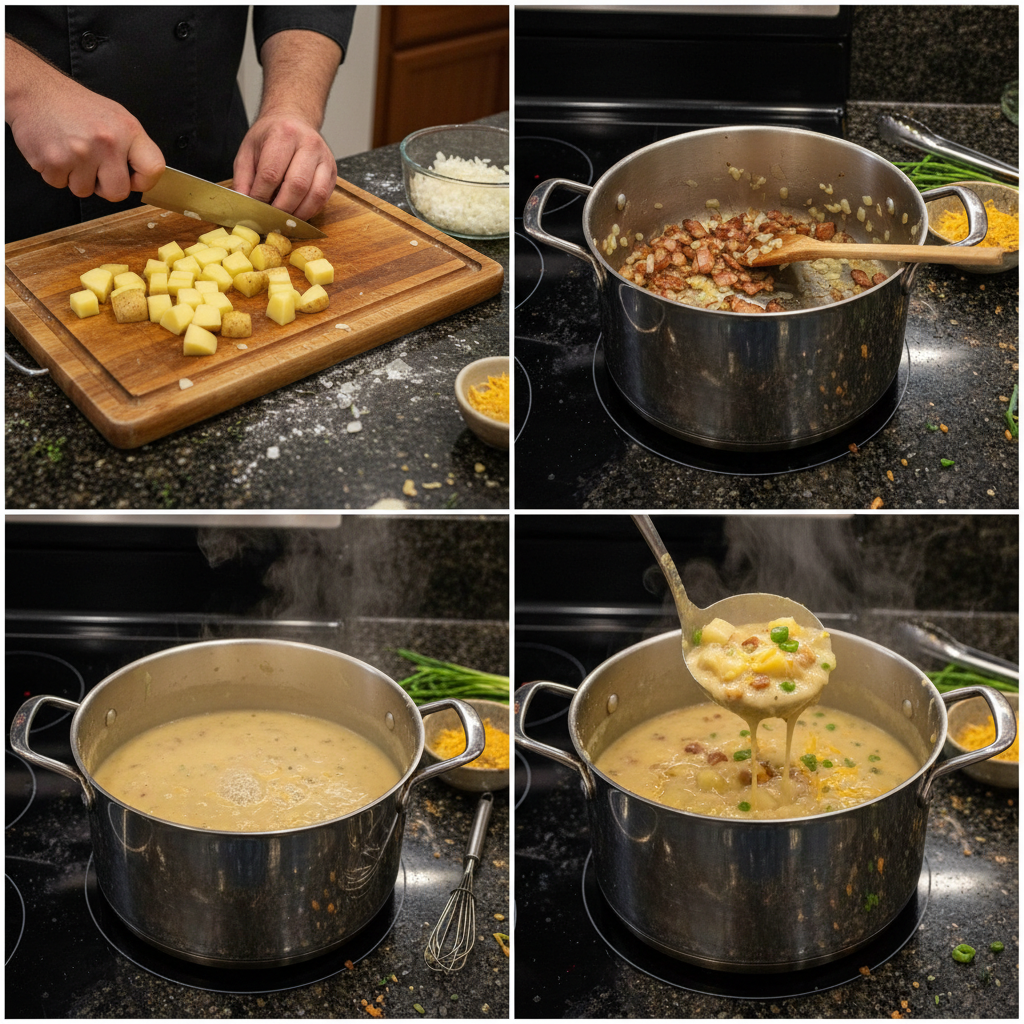
Place the bacon pieces in the pot over medium heat and let them cook until they’re beautifully crisp and browned. This usually takes about 5-7 minutes as the bacon sizzles and renders its delicious fat.
Once the bacon is perfectly crisp, use a slotted spoon to remove the pieces and set them aside on a plate lined with paper towels. We’ll save these glorious crunchy bits for later. Leave that precious bacon fat right in the pot – it’s the foundation of our flavor!
Now, add your 3 Tablespoons of butter to the bacon fat in the pot. Once it’s melted, toss in the chopped yellow onion. Cook the onions over medium heat for about 3-5 minutes, stirring occasionally, until they become tender and translucent, filling your kitchen with a sweet aroma.
Next, add your minced garlic cloves to the pot. Cook for just about 30 seconds, stirring constantly, until the garlic becomes fragrant. Be careful not to let it brown or burn, as burnt garlic can turn bitter.
Phase 2: Creating the Roux and Simmering the Soup
Sprinkle the ⅓ cup of all-purpose flour over the cooked onions and garlic in the pot. Stir well, using a whisk if needed, until the mixture is smooth and the flour is fully incorporated, forming a thick paste – this is our roux, the thickening agent for our soup.
Now, it’s time for the liquids and potatoes. Add the diced gold potatoes to the pot, along with the 4 cups of chicken broth, 2 cups of milk, ⅔ cup of heavy cream, 1 ½ teaspoon of salt, 1 teaspoon of ground pepper, and the ¼ – ½ teaspoon of ancho chili powder. Stir everything well to combine.
Bring the soup to a gentle boil, then reduce the heat slightly and continue to cook for about 10 minutes, or until the potatoes are tender when pierced with a fork. To ensure consistent potato cooking, I always cut my potatoes into pieces no larger than 1” and strive for uniform size, preventing some from being mushy and others still hard.
Phase 3: Achieving the Perfect Creamy-Chunky Texture
Once the potatoes are tender, reduce the heat to a simmer. Here’s where we get that glorious creamy yet chunky texture! Carefully remove approximately half of the soup (about 5 cups, or just eyeball it!) to a blender. Be extra careful as it will be very hot!
Puree the soup until it’s smooth and velvety. Alternatively, and often my preferred method for convenience, you can use an immersion blender directly in the pot. Puree about half of the soup, leaving some chunks of potato for that delightful textural contrast. Remember, for the ideal creamy-chunky texture, we’re not aiming for a completely smooth soup here.
Return the pureed soup to the pot if you used a standard blender. Now, add the ⅔ cup of sour cream and, importantly, the reserved crispy bacon pieces. Stir everything well to combine. A common mistake to avoid is blending the bacon into the soup, which would cause it to lose its wonderful crispy texture.
Allow the soup to simmer for another 15 minutes before serving. This simmering time helps the flavors meld beautifully and the soup to thicken slightly to a perfect, rich consistency.
Finally, ladle this comforting loaded potato soup into bowls. Top with additional sour cream, crumbled bacon, shredded cheddar cheese, or fresh chives. Enjoy every warm, flavorful spoonful!
Make-Ahead & Storage Solutions
This loaded potato soup is fantastic for meal prep! Knowing how to properly store and reheat your creations is key to enjoying them long after they’re made. This section provides all the instructions for freezing and reheating leftover soup, addressing those common content gaps.
Refrigerator Storage
Once your soup has cooled completely (I often place the pot in an ice bath to speed this up safely), transfer it to airtight containers. I recommend glass containers or sturdy plastic ones. Stored properly in the refrigerator, the soup will remain fresh and delicious for 3-4 days. The flavors actually deepen overnight!
Freezer Storage
For longer storage, this loaded potato soup freezes beautifully. Again, ensure the soup is completely cool. Divide it into freezer-safe bags (laying them flat for easier stacking) or airtight freezer-safe containers. Leave about an inch of headspace if using rigid containers to allow for expansion. Label each container or bag with the date. It will keep well in the freezer for up to 3 months.
Thawing and Reheating
- From Frozen: The best way to thaw frozen soup is to transfer it to the refrigerator 24 hours before you plan to reheat it. For quicker reheating, you can gently reheat the soup directly from frozen in a pot over low heat, stirring frequently, or carefully microwave it, pausing to stir.
- From Refrigerated: To reheat, you can use the stovetop or microwave. On the stovetop, warm over medium-low heat, stirring occasionally, until heated through. In the microwave, heat in 1-2 minute intervals, stirring between each, until hot.
After reheating, if the soup seems a little too thick or has lost some of its initial creaminess, simply stir in a splash of additional milk or cream until it reaches your desired consistency. This simple trick restores its luscious texture every time.
Ingredient Deep Dive & Adaptations
Let’s take a closer look at some key ingredients and how you can adapt this recipe to suit your tastes or dietary needs.
Choosing Your Potatoes Wisely
The type of potato you choose significantly impacts the final texture of your loaded potato soup. I specifically call for Gold potatoes (like Yukon Golds) because they are slightly waxy and creamy, yet they hold their shape remarkably well, giving you those delightful tender chunks alongside the smooth, pureed base. They break down just enough to thicken the soup naturally without becoming overly starchy or gluey.
Russet potatoes, on the other hand, are much starchier. While they’re fantastic for fluffy mashed potatoes, in a soup they tend to disintegrate more readily, especially if overcooked, which can result in a thicker, slightly grainier texture if not blended completely smooth. If you prefer a very thick, completely smooth soup, Russets can work, but for that perfect creamy-chunky balance, Gold potatoes are my top recommendation.
Dairy Decisions: Milk, Cream, and Sour Cream
The dairy in this recipe is truly what makes it a rich, creamy potato soup recipe. Let me clarify their distinct roles, as I know questions sometimes arise about heavy cream vs. sour cream.
- Milk: This provides the initial liquid base and contributes some richness. I recommend using whole milk for the best flavor and texture, but 2% can work in a pinch, though the soup may be slightly less rich.
- Heavy Cream: This is where the luxuriousness comes in! Heavy cream, with its higher fat content, adds incredible richness, body, and a velvety mouthfeel to the soup. It also has a greater stability, meaning it’s less likely to curdle when heated, ensuring a smooth finish.
- Sour Cream: Added at the end, sour cream doesn’t just thicken the soup further; it introduces a wonderful tangy bright note that cuts through the richness, balancing the overall flavor profile. For the best results, use full-fat sour cream.
For a dairy-free vegetarian option, you can use unsweetened full-fat coconut milk or a blend of soaked and pureed cashews (cashew cream) as a substitute for both milk and heavy cream. For sour cream, there are several plant-based sour cream alternatives available that work quite well, providing a similar tang and thickening quality.
Fresh vs. Dried Herbs: Aromatic Impact
When it comes to herbs like chives, and aromatics like garlic and onion, there’s a distinct difference in using them fresh versus dried.
- Fresh Herbs: For this loaded potato soup, fresh chives are typically used as a garnish. They provide a bright, delicate, oniony flavor and a pop of color that truly elevates the dish at the point of serving. Fresh herbs are best for finishing and adding a burst of immediate flavor.
- Dried Herbs: Dried herbs like the ancho chili powder (which is technically a spice but follows similar principles) are incorporated during the cooking process to infuse the entire soup with their concentrated flavor. If you were to consider other dried herbs, generally, you’d use about one-third the amount of dried herbs compared to fresh, as their flavor is more potent. However, for this recipe, the aromatics (onion, garlic) and spices (ancho chili powder) are perfectly balanced as written.
Pro Tips & Troubleshooting
Even seasoned chefs learn new tricks! Here are my personal pro tips for perfecting your loaded potato soup and tackling common kitchen mishaps.
Pro Tips for Perfection
- Consistent Potato Cooking: This is paramount! Always emphasize cutting your Gold potatoes into even, no larger than 1” pieces. This ensures uniform tenderness, preventing the frustrating scenario where some potatoes are mushy while others remain hard. Consistent size leads to consistent cooking.
- Pureeing for Ideal Texture: To achieve that perfect creamy yet chunky texture, I always recommend pureeing about half of the soup. Use an immersion blender directly in the pot for ease, or carefully transfer half to a standard blender. This technique ensures richness without losing all those delightful potato chunks. Crucially, avoid blending the reserved bacon, as it will lose its crispy charm.
- Flavor Building with Ancho: The ancho chili powder is a subtle game-changer. It adds a beautiful depth and smoky undertone. Start with ¼ teaspoon, taste, and then add more if you desire. It’s a gentle spice, but it builds fantastic layers of flavor.
- Seasoning Smartly: With ingredients like chicken broth (which can vary in sodium) and salty bacon, it’s wise to start with the specified salt amount and then taste and adjust at the end. It’s much easier to add more salt than to fix an over-salted soup!
- The Unique Crouton Topping: Don’t skip the Crispy Herb & Garlic Crouton Topping! Toasting your bread cubes in butter with fresh herbs and minced garlic until golden brown creates an aromatic, crunchy contrast that elevates this soup to restaurant quality.
Common Mistakes to Avoid
- Uneven Potato Doneness: As mentioned, unevenly sized potatoes will cook at different rates, leading to an inconsistent texture. Take the time to dice them uniformly.
- Blending the Bacon: Please, whatever you do, do not blend your beautifully crisped bacon into the soup! Add it back at the end to maintain its distinct texture.
- Over-Salting: With salted chicken broth and bacon, it’s easy to overdo the salt. Always taste before adding more.
- Scorching the Soup: Once the flour is added and the soup begins to thicken, it can be prone to sticking to the bottom of the pot. Stir frequently, especially during the simmering phase, and keep the heat on medium-low to prevent scorching.
- Soup Too Thin or Too Thick:
- If your soup is too thin: Create a slurry by whisking 1-2 tablespoons of flour or cornstarch with an equal amount of cold water or milk until smooth. Slowly whisk this into your simmering soup and cook for a few more minutes until it thickens.
- If your soup is too thick: Simply whisk in a little more chicken broth or milk, a tablespoon at a time, until you reach your desired consistency.
Serving & Storage
Presentation is half the meal, and knowing how to keep your delicious loaded potato soup fresh for later is just as important!
Serving Ideas
My absolute favorite way to serve this creamy delight is with A Crispy Herb & Garlic Crouton Topping . The garlicky, herbaceous crunch provides an unparalleled textural and aromatic contribution that truly sets this soup apart. Beyond that, the classic toppings truly make this a hearty, comforting meal.
Here are my go-to garnishes:
- Generous sprinkle of freshly shredded cheddar cheese, allowing it to melt into the warm soup.
- A scattering of vibrant, fresh chives for a delicate oniony bite and pop of color.
- A dollop of additional sour cream for extra tang and creaminess.
- Crumbled extra bacon for even more smoky, salty crunch.
- For creative twists, consider crispy French fried onion rings for another layer of texture, or thin slices of Tallegio cheese for a gourmet touch.
As for what to serve alongside this satisfying comfort food? Since it’s truly a substantial one-pot meal on its own, I often pair it with something simple. A crusty loaf of bread for dipping, a light green salad with a vinaigrette to cut through the richness, or even half a gourmet sandwich (like a grilled cheese) makes for a complete and utterly satisfying meal.
Storage and Make-Ahead
This loaded potato soup is a fantastic make-ahead option! As detailed in our “Make-Ahead & Storage Solutions” section above, you can confidently store leftovers in the refrigerator for 3-4 days or freeze them for up to 3 months. When reheating, remember my trick of adding a splash of milk or cream to restore that beautiful, creamy texture.
If you’re planning to make this soup for a future gathering, consider preparing the soup base (cooking the bacon, onions, garlic, and potatoes with broth) ahead of time. Then, on the day of serving, simply add the dairy components (milk, heavy cream, sour cream) and bring it to a gentle simmer. This helps maintain the freshest texture and flavor of the cream.
Conclusion
There you have it—my ultimate recipe for a truly exceptional loaded potato soup. With its incredibly creamy texture, hearty chunks of potato, and of course, that standout Crispy Herb & Garlic Crouton Topping, this is the kind of comfort food that satisfies on every level. I genuinely believe that with these clear instructions and my expert tips, you can confidently create a restaurant-quality soup right in your own kitchen, whether you’re a seasoned chef or just starting your culinary journey.
Don’t hesitate to experiment with the suggested variations or serving ideas to personalize your experience. Now go forth, get cooking, and savor every delicious spoonful! If you loved this recipe, please print it out, share it with your friends, and explore other comforting creations right here on my blog.
FAQ
- What are the best types of potatoes to use for potato soup?
- I highly recommend Gold potatoes (like Yukon Golds) for this recipe. They offer a creamy texture while holding their shape well, giving you a wonderful creamy-chunky soup. While Russets can work, they tend to be starchier and may break down more, resulting in a slightly grainier or more uniformly blended soup. You can find more details in the “Ingredient Deep Dive” section.
- Can I make this loaded potato soup in a slow cooker (crockpot)?
- Yes, you can adapt this recipe for a slow cooker! I would recommend pre-cooking the bacon, onions, and garlic on the stovetop first to build that crucial flavor base. Then, add the cooked aromatics, potatoes, chicken broth, milk, and seasonings to your slow cooker. Cook on low for 4-6 hours or high for 2-3 hours, until the potatoes are tender. Toward the end, puree half the soup with an immersion blender (or carefully transfer to a regular blender), then stir in the heavy cream and sour cream. Avoid adding the crispy bacon until serving.
- How do I store and reheat leftover potato soup?
- Leftover potato soup stores beautifully! You can keep it in an airtight container in the refrigerator for 3-4 days, or freeze it for up to 3 months. For detailed instructions on cooling, freezing, thawing, and reheating to maintain its best quality, please refer to the “Make-Ahead & Storage Solutions” section of this article.
- Can I make substitutions for milk or sour cream in this recipe?
- Absolutely! For a dairy-free variation, you can use unsweetened full-fat coconut milk or a cashew cream as a substitute for the milk and heavy cream. For sour cream, there are several plant-based sour cream alternatives available. Be aware that these substitutions may slightly alter the flavor and texture. For more in-depth guidance on dairy choices and substitutions, check out the “Ingredient Deep Dive” section.
- What are some creative toppings for loaded potato soup?
- While classic toppings like shredded cheddar cheese, fresh chives, extra sour cream, and crispy bacon are always a hit, my favorite creative topping is the Crispy Herb & Garlic Crouton Topping – it adds incredible texture and flavor! Other ideas include crispy fried onions, pickled jalapeños for a kick, or even a sprinkle of smoked paprika for extra depth.
- How can I troubleshoot if my potato soup is too thick or too thin?
- If your soup is too thin, create a slurry by whisking 1-2 tablespoons of flour or cornstarch with an equal amount of cold water or milk, then slowly whisk it into your simmering soup until thickened. If your soup is too thick, simply whisk in a little more chicken broth or milk, a tablespoon at a time, until you reach your desired consistency. You’ll find more detailed solutions in the “Pro Tips & Troubleshooting” section.
- What’s the difference between heavy cream and sour cream in this recipe?
- In this recipe, heavy cream primarily adds luxurious richness, body, and a velvety mouthfeel to the soup, contributing significantly to its overall creaminess. Sour cream, on the other hand, is added at the end to provide a delightful tanginess that balances the richness, along with a slight thickening effect. Each has a distinct and important role in achieving the perfect flavor and texture, as elaborated in the “Ingredient Deep Dive” section.

Creamy Loaded Potato Soup Recipe + Crispy Croutons
Ingredients
Equipment
Method
- Place the bacon pieces in your largest Dutch Oven or a sturdy soup pot over medium heat and cook until beautifully crisp and browned (about 5-7 minutes).
- Once crisp, use a slotted spoon to remove the bacon and set aside on paper towels. Leave the bacon fat in the pot.
- Add the 3 Tablespoons of butter to the bacon fat in the pot. Once melted, add the chopped yellow onion. Cook over medium heat for about 3-5 minutes, stirring occasionally, until tender and translucent.
- Add the minced garlic cloves to the pot. Cook for about 30 seconds, stirring constantly, until fragrant. Be careful not to let it brown or burn.
- Sprinkle the ⅓ cup of all-purpose flour over the cooked onions and garlic. Stir well, using a whisk if needed, until the mixture is smooth and the flour is fully incorporated, forming a thick paste (the roux).
- Add the diced gold potatoes, 4 cups of chicken broth, 2 cups of milk, ⅔ cup of heavy cream, 1 ½ teaspoon of salt, 1 teaspoon of ground pepper, and ¼ - ½ teaspoon of ancho chili powder to the pot. Stir everything well to combine.
- Bring the soup to a gentle boil, then reduce the heat and cook for about 10 minutes, or until the potatoes are tender when pierced with a fork. Ensure consistent potato cooking by cutting pieces no larger than 1 inch.
- Once the potatoes are tender, reduce the heat to a simmer. Carefully remove approximately half of the soup (about 5 cups, or eyeball it) to a blender. Puree until smooth and velvety. Alternatively, use an immersion blender directly in the pot to puree about half of the soup, leaving some potato chunks for texture.
- Return the pureed soup to the pot (if using a standard blender). Add the ⅔ cup of sour cream and the reserved crispy bacon pieces. Stir everything well to combine, being careful not to blend the bacon.
- Allow the soup to simmer for another 15 minutes before serving to meld flavors and thicken to a rich consistency.
- Finally, ladle the comforting loaded potato soup into bowls. Top with additional sour cream, crumbled bacon, shredded cheddar cheese, or fresh chives. Enjoy every warm, flavorful spoonful!