There’s nothing quite like a steaming bowl of rich, homemade creamy tomato soup to warm the soul on a chilly evening. It’s a culinary hug, a comfort classic that my family requests again and again. While many think a truly delicious tomato soup is a daunting task, I’m here to show you how easy it is to create a deeply flavorful, perfectly balanced version right in your own kitchen. Forget those bland, watery store-bought cans; we’re about to unlock the secret to a luscious, satisfying soup that will become your new go-to. Get ready to master a genuinely exceptional homemade tomato soup!
Why You’ll Love This Recipe
Every chef has a secret, and for my creamy tomato soup, it’s all about the unique twist: caramelized tomato paste. While many recipes simply add tomato paste, we take it a step further, sautéing 2 tablespoons of tomato paste with the onions and garlic until it develops a deep, rich reddish-brown color.
Flavor Deepening: This isn’t just an extra step; it’s a game-changer. By allowing the tomato paste to caramelize through the Maillard reaction, we intensify its natural sugars and unlock incredible umami flavors. This process builds a far more robust, complex base for our soup, balancing acidity and creating a richer, less one-dimensional tomato profile that truly elevates the dish beyond any ordinary version you’ve tasted.
Easy & Comforting: Despite its gourmet taste, this recipe is surprisingly straightforward, making it perfect for a cozy weeknight meal. It’s incredibly satisfying and comforting, a true crowd-pleaser for any family gathering.
Meal Prep Friendly: This soup also makes for excellent meal prep, tasting even better the next day as the flavors meld and deepen.
Superior to Store-Bought: Once you taste the depth of flavor achieved with this technique, you’ll never go back to the canned stuff!
Ingredients Needed
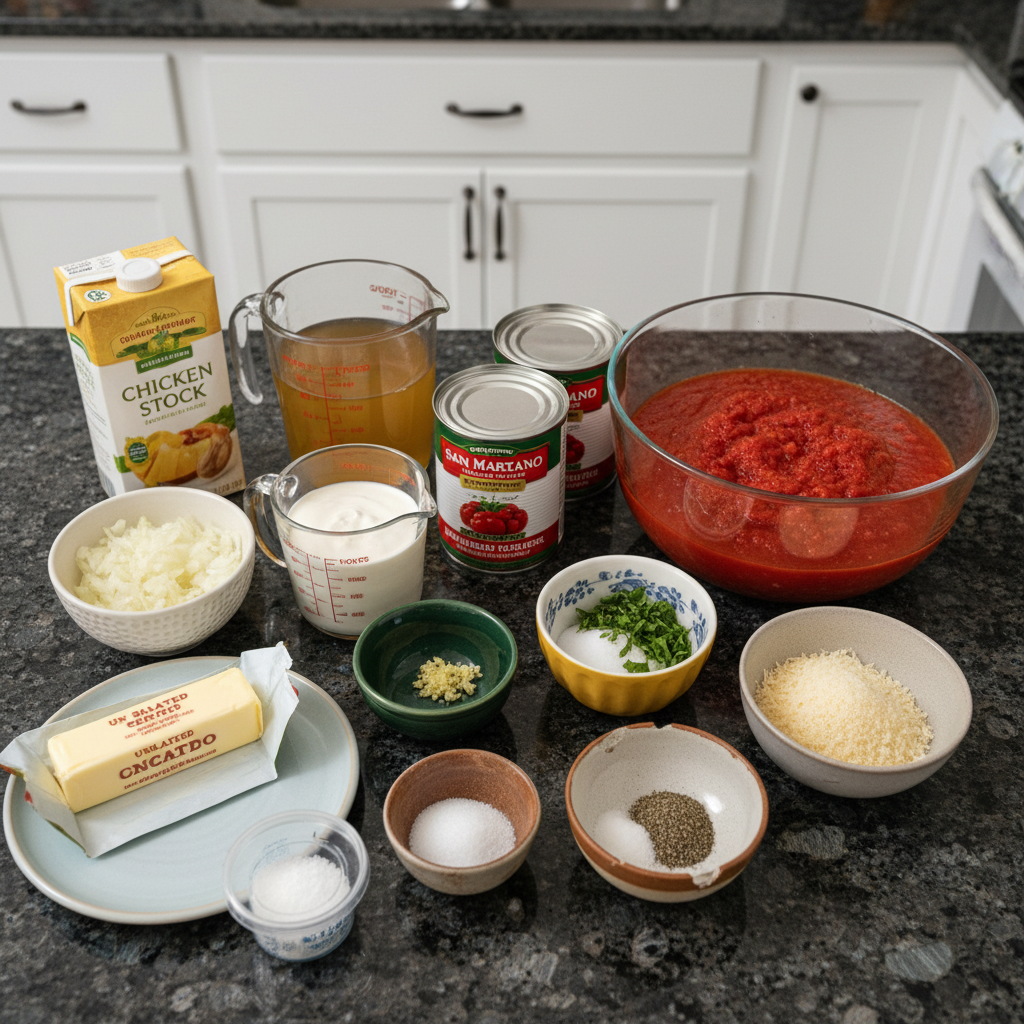
- 4 Tbsp unsalted butter
- 2 yellow onions, (3 cups finely chopped)
- 3 garlic cloves, (1 Tbsp minced)
- 56 oz crushed tomatoes, (two, 28-oz cans) with their juice, preferably San Marzano
- 2 cups chicken stock
- 1/4 cup chopped fresh basil, plus more to serve
- 1 Tbsp sugar, or added to taste
- 1/2 tsp black pepper, or to taste
- 1/2 cup heavy whipping cream, or to taste to combat acidity
- 1/3 cup parmesan cheese, freshly grated, plus more to serve
Ingredient Notes & Substitutions
Crushed Tomatoes: The heart of any great tomato soup lies in its tomatoes. I strongly recommend using high-quality crushed tomatoes, especially San Marzano tomatoes, for their inherent sweetness, low acidity, and balanced flavor. In the US, look for reputable brands like Mutti, Cento, Sclafani, or Rega. If you can only find canned whole peeled tomatoes, you can certainly use them; just pulse them briefly in a food processor before adding them to the pot.
Broth: Chicken stock adds wonderful depth to the soup, contributing to a richer mouthfeel. However, for a fantastic vegetarian option, feel free to swap it out for an equal amount of good quality vegetable broth. Homemade chicken broth will always yield the best flavor, if you have it!
Basil: Fresh basil brings a bright, aromatic lift that dried herbs simply can’t match, especially as a garnish. For the soup itself, fresh basil is preferred, but about 1 tablespoon of dried basil can be substituted, added earlier with the crushed tomatoes to allow its flavor to bloom.
Dairy: Heavy whipping cream is key to achieving that luxurious, silky texture and also plays a crucial role in balancing the acidity of the tomatoes. For a lighter soup, you could use milk or half-and-half, though the texture and richness will differ. For a dairy-free alternative, full-fat coconut milk or a homemade cashew cream can work, but be aware that they will impart their own subtle flavor notes.
Parmesan Cheese: Always opt for freshly grated Parmesan cheese. The pre-grated varieties often contain anti-caking agents and lack the vibrant, nutty flavor that fresh Parmesan adds, both in the soup and as a garnish. Look for vegetarian Parmesan options if you need them for your dietary choices.
Tomato Paste (Crucial Note): While not listed above, 2 tablespoons of tomato paste are absolutely essential for this recipe’s signature rich flavor. It’s the secret weapon introduced during the cooking steps to be caramelized, creating that incredible depth we’re after!
How to Make The Best Creamy Tomato Soup
Sautéing the Aromatics and Our Secret Weapon
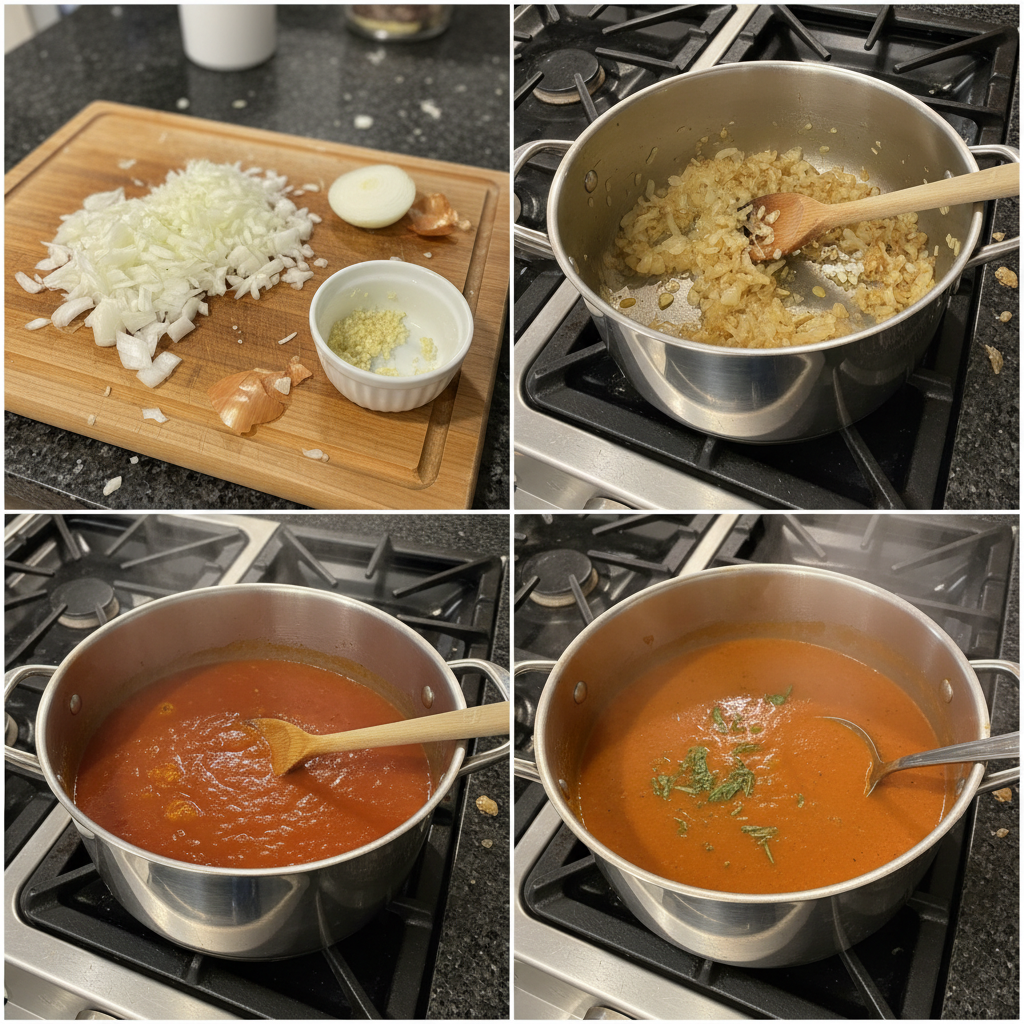
First, grab a nonreactive pot or an enameled Dutch oven – this is important to prevent a metallic taste from acidic tomatoes. Place it over medium heat. Add the unsalted butter and let it melt until it’s sizzling gently. Toss in your finely chopped yellow onions. Sauté them for 10-12 minutes, stirring occasionally, until they become beautifully softened and golden. You’ll notice the sweet aroma beginning to fill your kitchen.
Now, add your minced garlic cloves. Sauté for just 1 minute until fragrant. This is where our unique twist comes in: add 2 tablespoons of tomato paste to the pot. Stir it in with the onions and garlic, and continue to sauté for another 2-3 minutes. Watch as the tomato paste deepens in color, turning a rich reddish-brown. This caramelization process, where the sugars toast and the Maillard reaction works its magic, is absolutely critical for building the profound umami flavor and balancing the acidity in our finished soup.
Simmering to Perfection
Once the tomato paste is deeply caramelized and fragrant, pour in the crushed tomatoes (with their juice) and the chicken stock. Add most of the chopped fresh basil (reserving a little for garnish), the sugar, and black pepper. Stir everything together well. Bring the mixture to a boil, then reduce the heat to a gentle simmer. Partially cover the pot with a lid and let it simmer for 10 minutes, allowing all those incredible flavors to meld and deepen. The aroma will be simply divine!
Blending for Creaminess
At this stage, you have a choice. If you prefer a rustic, chunky soup, you can skip this step. However, for a truly creamy tomato soup, it’s time to blend. If you have an immersion blender, carefully blend the soup directly in the pot to your desired consistency – smooth or with a little texture. If using a regular blender, work in batches. Only fill the blender halfway with the hot liquid, secure the lid, and place a kitchen towel over the top for extra safety. Pulse a few times initially to release steam safely before blending until smooth. Once blended, return all the creamy soup to the pot over medium heat.
Finishing Touches and Acidity Balance
With the soup gently simmering again, stir in the heavy whipping cream and the freshly grated Parmesan cheese. Allow it to come back to a gentle simmer, just enough to incorporate the cream and melt the cheese. Now, taste your soup. This is your chance to perfect the acidity balance. If it tastes a little too sharp, add a pinch more sugar or a touch more heavy cream. Season to taste with additional salt and pepper if needed. Once perfectly seasoned, turn off the heat.
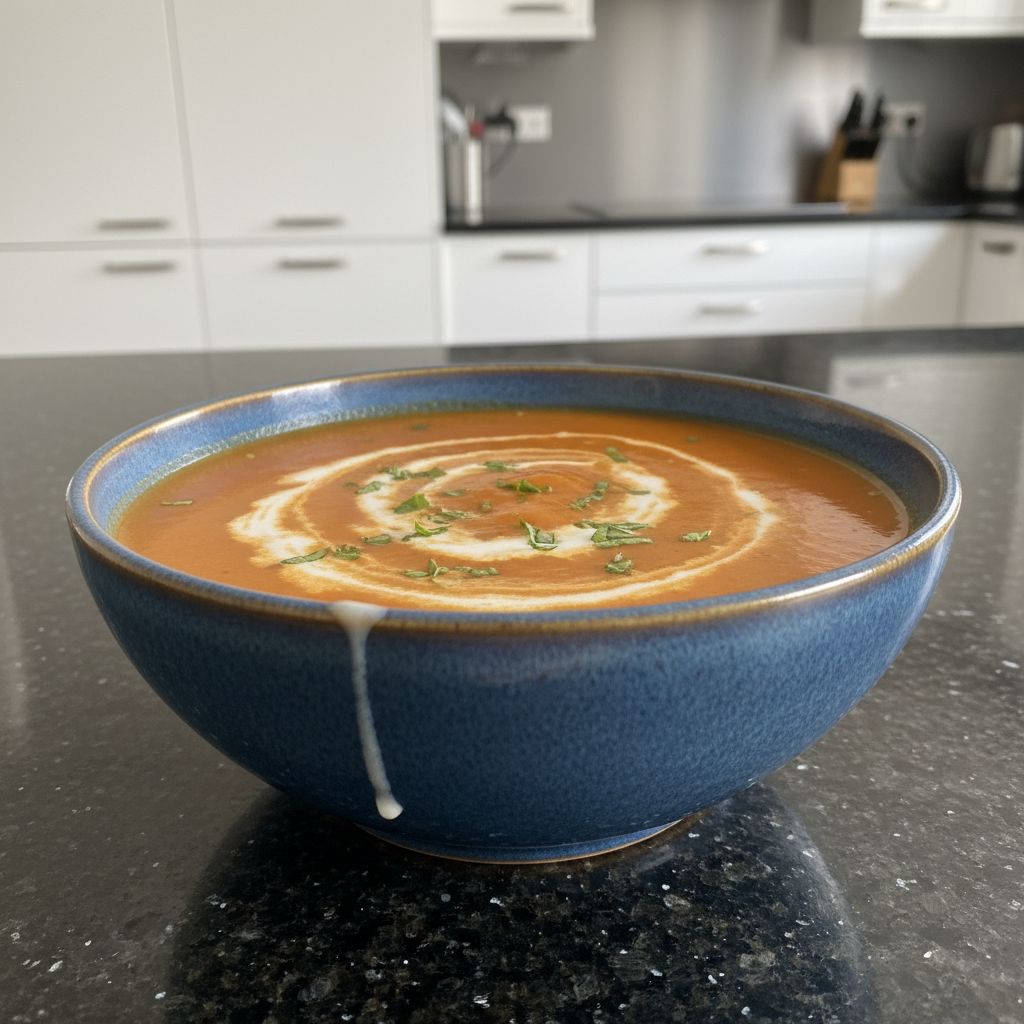
Ladle your glorious, rich, creamy tomato soup into warm bowls and finish with a sprinkle of extra grated Parmesan and a flourish of fresh, chopped basil. Enjoy!
Optimizing Your Tomato Soup: Ingredients, Speed, and Additions
Choosing the Best Tomatoes for Your Soup
The foundation of an outstanding tomato soup is, naturally, the tomatoes themselves. While any good quality crushed tomatoes will work, I consistently recommend San Marzano crushed tomatoes. They are inherently sweeter, possess lower acidity, and offer a more balanced flavor profile, contributing to a naturally richer soup. When shopping in the US, look for cans explicitly labeled “DOP San Marzano” or from trusted Italian brands like Mutti, Cento, Sclafani, or Rega. If you find only canned whole peeled tomatoes, they are an excellent substitute; simply pulse them a few times in a food processor or crush them by hand before adding to the pot. Avoid diced tomatoes if possible, as they often contain calcium chloride which prevents them from breaking down fully, leading to a chunky texture even after blending.
Tips for Faster Prep & Making it Easier
Even though this homemade tomato soup recipe is straightforward, there are ways to speed up the prep process without sacrificing flavor. Implementing good mise en place – preparing all your ingredients before you start cooking – is key. You can save time by using pre-chopped yellow onions and pre-minced garlic cloves, readily available at most grocery stores. For larger batches of onions or if you’re working with canned whole peeled tomatoes, your food processor is a fantastic tool to quickly chop or pulse them to the right consistency.
Optional Vegetable Additions for More Flavor
While this recipe shines with its simplicity, you can certainly add other vegetables to enhance its complexity and umami flavor. For a classic sofrito base, consider finely dicing and sautéing carrots and celery along with the onions. These will soften and sweeten, adding another layer of flavor. For a smoky depth, a roasted red pepper or two, added along with the crushed tomatoes, can be absolutely delicious. These additions blend seamlessly into the soup’s profile without detracting from the star, the rich tomato flavor.
Pro Tips & Troubleshooting
Pro Tips for the Perfect Batch
Chop Basil Smartly: For beautifully cut fresh basil that doesn’t bruise, stack the leaves, roll them tightly into a log, and then slice thinly across the log. This chiffonade technique yields elegant strips that release maximum aroma.
Boost Broth Flavor: For unparalleled depth, use high-quality homemade chicken broth. If using store-bought, opt for a good quality, low-sodium version so you can control the seasoning.
Texture Control: To achieve a chunky soup, simply skip the blending step entirely. For a perfectly smooth creamy tomato soup, blend until no bits remain. For a little texture, blend for less time or use an immersion blender to target specific areas.
Acidity Rescue: If your soup tastes a bit too sour or acidic, don’t despair! You can usually achieve perfect acidity balance by stirring in a little more heavy cream and/or a pinch more sugar, tasting as you go. The caramelized tomato paste in this recipe already does a lot of the heavy lifting here!
Don’t Rush Caramelization: That tomato paste caramelization step is paramount. Don’t rush it! Allowing it to truly deepen in color and aroma is key to the recipe’s success, contributing significantly to the rich umami flavor and overall acidity balance.
Common Mistakes to Avoid
Wrong Pot Material: Avoid using aluminum, cast iron, or copper pots for cooking tomato soup. The acidity of the tomatoes can react with these metals, imparting an unpleasant metallic taste to your delicious creation. Always use a nonreactive pot, such as an enameled Dutch oven or a high-quality stainless steel pot.
Overfilling the Blender: When using a regular blender for hot liquids, never overfill it! Hot liquids expand and can create dangerous pressure. Fill it no more than halfway, and always pulse a few times initially with the lid slightly ajar (covered with a towel) to release steam safely before fully blending.
Using Dried Herbs as Garnish: While dried basil can be used during the cooking process if fresh isn’t available, it should never be used as a garnish. Dried herbs don’t offer the visual appeal or vibrant flavor burst that fresh herbs provide at the end.
Skipping Caramelization: As highlighted, the caramelizeation of the tomato paste is the unique twist and a fundamental step for this recipe’s deep, rich flavor. Skipping or rushing this will result in a less complex and flavorful soup.
Serving & Storage
Serving Suggestions for Your Delicious Soup
The ultimate pairing for a bowl of warm, creamy tomato soup? Without a doubt, a gooey grilled cheese sandwich! The rich soup and salty, crispy sandwich are a match made in culinary heaven. For elegant garnishes, I love to add a swirl of additional freshly grated Parmesan cheese and a sprinkle of thinly sliced fresh basil. For a delightful crunch, serve your soup with homemade croutons or simple toasted bread slices, also known as crostini, perfect for dunking. A light side salad with a vinaigrette dressing also rounds out the meal beautifully.
Storage and Make-Ahead Tips
Refrigeration: Leftover creamy tomato soup stores wonderfully. Once cooled completely, transfer it to an airtight container and refrigerate for up to 3-4 days. The flavors often deepen overnight!
Freezing Creamy Tomato Soup: This soup is quite freezer-friendly, but with a crucial tip for cream-based soups. For the best texture retention, I advise freezing the soup before adding the heavy whipping cream and Parmesan cheese. Simply prepare the soup up to the blending step, cool it completely, and then freeze it in airtight containers or freezer bags for up to 3 months. When you’re ready to enjoy, thaw it overnight in the fridge, then reheat gently on the stovetop, stirring in the cream and cheese during the final reheating step. If you’ve already added the cream, you can still freeze it, but you may need to whisk it vigorously after reheating to prevent any separation.
Reheating Instructions: To reheat refrigerated soup, simply warm it gently on the stovetop over medium-low heat, stirring occasionally until hot. For thawed soup, follow the same method, adding the cream and cheese as directed. Avoid boiling rapidly to maintain the soup’s smooth, creamy texture. You can also reheat in the microwave in short bursts, stirring frequently.
This soup’s excellent storage capabilities make it an ideal candidate for meal prep, ensuring a delicious and comforting meal is always within reach.
Conclusion
There you have it – my secret to the absolute best homemade tomato soup! This recipe, with its simple yet powerful technique of caramelizing tomato paste, transforms humble ingredients into a deeply flavorful, comforting, and irresistibly rich meal. It’s an easy preparation that yields impressive, restaurant-quality results right in your own kitchen.
Whether you’re a seasoned chef or a beginner in the kitchen, I’m confident this recipe will become a cherished favorite. Try out the recommended variations, experiment with serving ideas, and make this luxurious, creamy tomato soup your family’s new go-to. I encourage you to whip up a batch soon – and don’t forget to leave a rating or comment below to let me know how much you loved it!
FAQ
Q: Can I use fresh tomatoes or different canned tomatoes for this recipe?
A: While San Marzano crushed tomatoes are ideal for their balanced flavor and low acidity, you certainly have options. High-quality canned whole peeled tomatoes are an excellent substitute; simply pulse them a few times in a food processor before adding. You can also use fresh, ripe tomatoes during their peak season, but they will require extra effort for peeling, seeding, and a longer cooking time to break down and concentrate their flavor. For best results, stick with quality canned options outside of summer months.
Q: What type of broth is recommended for tomato soup and can it be vegetarian?
A: Chicken stock provides a robust depth of flavor that I love in this tomato soup. However, for a delicious vegetarian version, an equal amount of good quality vegetable broth works perfectly. I always recommend using low-sodium broths so you have full control over the final seasoning of your soup, allowing you to taste and adjust as you go.
Q: How do I prevent or fix overly acidic or sour tomato soup?
A: The beauty of this recipe is that the caramelized tomato paste naturally helps with acidity balance. If, after tasting, your soup still seems a bit too sharp or sour, a small pinch of sugar, a bit more heavy cream, or even a tiny amount of baking soda (added very carefully, as it will foam initially) can help to neutralize the acidity. Always add a little at a time, tasting as you go, until you reach your preferred balance.
Q: Can creamy tomato soup be frozen, and how should I reheat it?
A: Yes, this creamy tomato soup is very freezer-friendly! For the best results and texture, I recommend freezing the soup *before* adding the heavy whipping cream and Parmesan cheese. Thaw overnight in the refrigerator, then gently reheat on the stovetop, stirring in the cream and cheese during the final heating step. If you’ve already added the dairy, it can still be frozen, but you may need to whisk it vigorously after reheating to prevent any separation.
Q: What kind of pot is best for cooking tomato soup?
A: It’s crucial to use a nonreactive pot when cooking tomato soup. Acidic tomatoes can react with certain metals, like aluminum, cast iron, or copper pots, which can impart an undesirable metallic taste. An enameled Dutch oven or a high-quality stainless steel pot are excellent choices that will keep your soup tasting pure and delicious.
Q: Can I substitute heavy cream with a lighter dairy alternative like milk?
A: Yes, you can substitute heavy cream with lighter dairy alternatives such as milk or half-and-half for a less rich soup. Be aware that this will result in a less creamy and luxurious texture. For those avoiding dairy, full-fat coconut milk or a homemade cashew cream can also be used, but these will introduce their own distinct flavor profiles to the soup.
Q: Isn’t this just basically tomato sauce that you would make to serve over pasta?
A: While both share a base of tomatoes and aromatics, this creamy tomato soup is distinct from a typical pasta sauce. Our soup is generally thinner, almost always blended smooth for a luxurious texture, and designed to be a standalone dish or paired with something like a grilled cheese sandwich. The unique depth achieved from the caramelized tomato paste, the generous quantity of chicken stock (or vegetable broth), and the luscious addition of heavy whipping cream all contribute to a flavor and consistency that sets it apart from a rich, thick pasta sauce.
Best Creamy Tomato Soup: Rich, Homemade & Easy
Ingredients
Equipment
Method
- Grab a nonreactive pot or an enameled Dutch oven and place it over medium heat. Add the unsalted butter and let it melt until sizzling gently.
- Toss in your finely chopped yellow onions. Sauté them for 10-12 minutes, stirring occasionally, until they become beautifully softened and golden.
- Now, add your minced garlic cloves. Sauté for just 1 minute until fragrant. Add 2 tablespoons of tomato paste to the pot. Stir it in with the onions and garlic, and continue to sauté for another 2-3 minutes. Watch as the tomato paste deepens in color, turning a rich reddish-brown, indicating caramelization.
- Once the tomato paste is deeply caramelized and fragrant, pour in the crushed tomatoes (with their juice) and the chicken stock. Add most of the chopped fresh basil (reserving a little for garnish), the sugar, and black pepper. Stir everything together well.
- Bring the mixture to a boil, then reduce the heat to a gentle simmer. Partially cover the pot with a lid and let it simmer for 10 minutes, allowing all those incredible flavors to meld and deepen.
- For a truly creamy tomato soup, it's time to blend. If you have an immersion blender, carefully blend the soup directly in the pot to your desired consistency. If using a regular blender, work in batches, filling it no more than halfway with hot liquid. Secure the lid, place a kitchen towel over the top for safety, and pulse a few times to release steam before blending until smooth. Once blended, return all the creamy soup to the pot over medium heat.
- With the soup gently simmering again, stir in the heavy whipping cream and the freshly grated Parmesan cheese. Allow it to come back to a gentle simmer, just enough to incorporate the cream and melt the cheese.
- Taste your soup. If it tastes a little too sharp, add a pinch more sugar or a touch more heavy cream. Season to taste with additional salt and pepper if needed. Once perfectly seasoned, turn off the heat.
- Ladle your glorious, rich, creamy tomato soup into warm bowls and finish with a sprinkle of extra grated Parmesan and a flourish of fresh, chopped basil. Enjoy!